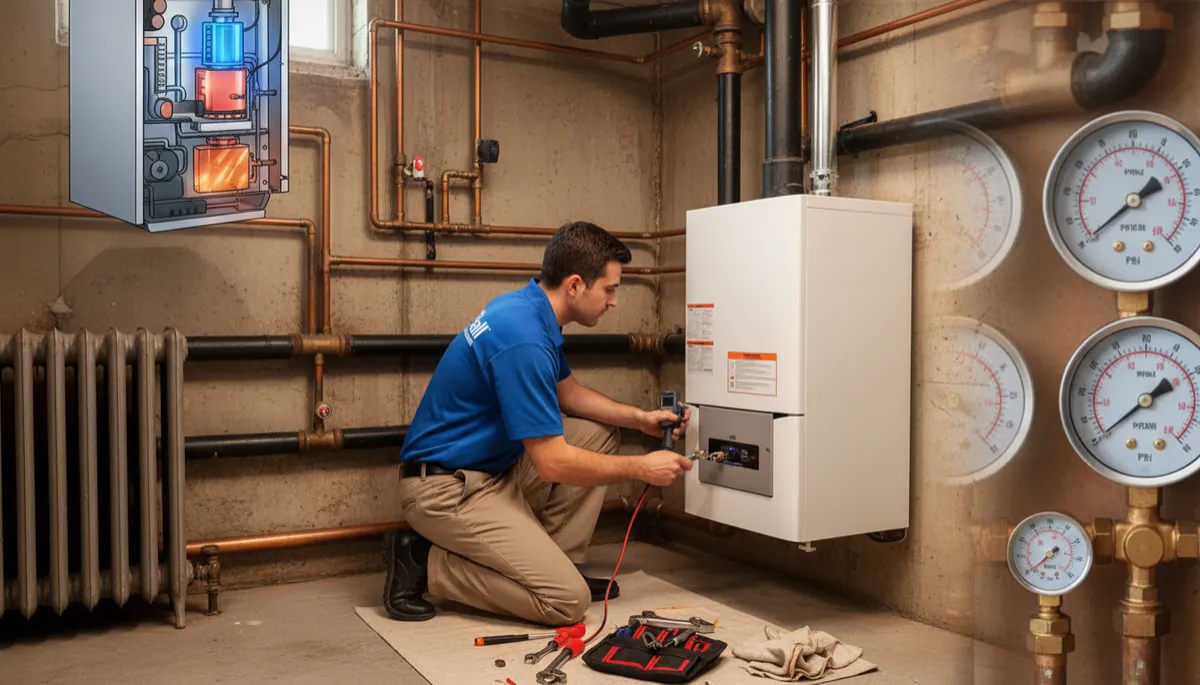
Boiler Maintenance Tips for NJ Homeowners
Home Heating, Boiler Maintenance NJ, Monmouth County
Boiler Maintenance 101: What Every NJ Homeowner Should Know
If you live in an older Monmouth County home, there is a good chance your heat comes from a boiler rather than a forced‑air furnace. Boilers are reliable workhorses, but they do need regular attention to stay safe, efficient, and ready for New Jersey’s long heating season. This guide breaks down boiler basics and practical maintenance tips so everyday homeowners in towns like Keyport, Hazlet, Union Beach, and Middletown can feel confident about caring for their systems.
How Boilers Work in NJ Homes
Understanding the basics of how your boiler works makes maintenance feel much less mysterious. While there are different designs, most residential boilers in Monmouth County use natural gas or oil to heat water, then send that heat throughout your home using either radiators or baseboard convectors.
Here is the general process:
A thermostat in your living space calls for heat when the temperature drops below the set point.
The boiler’s burner ignites, using gas or oil to heat water inside the boiler’s cast-iron or steel heat exchanger.
A circulator pump pushes the hot water through a loop of pipes to your radiators or baseboard heaters in each room.
As the water gives off heat, it cools slightly and returns to the boiler to be reheated and sent out again.
Most NJ homes with boilers use hot-water (hydronic) systems, not steam. Hydronic systems operate at relatively low pressure, controlled by a pressure gauge, expansion tank, and safety relief valve. These components help keep the system operating safely as water heats, expands, and cools over and over throughout the winter.
💡 Pro Tip: If you are unsure whether you have a steam or hot-water boiler, look at your radiators. Steam radiators usually have only one pipe connected; hot-water radiators typically have two.
Why Boiler Maintenance Matters in New Jersey
With our cold, damp coastal winters, your boiler works hard from late fall into early spring. Regular boiler maintenance NJ is not just a “nice to have” – it is essential for safety, comfort, and controlling energy bills. Skipping maintenance can lead to higher fuel use, surprise breakdowns, and even dangerous conditions like carbon monoxide leaks or burst pipes in extreme cases.
Safety: An annual boiler inspection helps catch issues with venting, combustion, and safety controls that could create fire or carbon monoxide hazards if ignored.
Efficiency: Soot buildup, dirty burners, and incorrect pressure all force your boiler to work harder, using more gas or oil than necessary to keep your Monmouth County home warm.
Reliability: A thorough boiler tune-up Monmouth County homeowners schedule before winter reduces the risk of “no heat” calls on the coldest January night.
System life: Just like changing the oil in a car, cleaning and adjusting your boiler regularly can add years to its service life and help you avoid premature replacement costs.
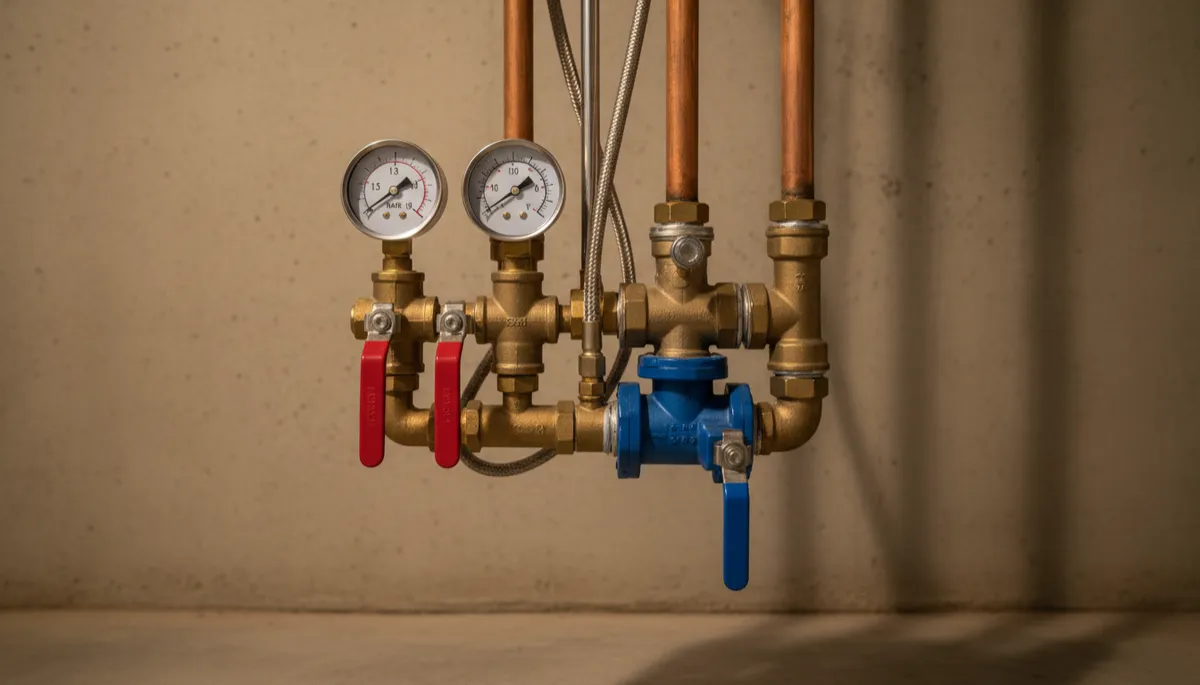
Clean, properly set boiler controls are key to safe, efficient operation all winter.
Your Annual Boiler Maintenance Checklist
A professional annual boiler inspection and tune-up is the foundation of good boiler care. However, there are also simple tasks homeowners can do to support the system between professional visits. Use this checklist as a guide for what should happen every heating season in your NJ home.
What a Professional Boiler Tune-Up Includes
Inspecting the heat exchanger, burners, and combustion chamber for cracks, corrosion, or soot buildup.
Cleaning burners and adjusting the flame for proper combustion and fuel efficiency.
Checking flue pipes and chimney connections to ensure exhaust gases are venting safely outside.
Testing safety controls, including the pressure relief valve, low-water cutoff (if present), and thermostat operation.
Verifying system pressure and temperature settings and inspecting the expansion tank for proper charge and condition.
Lubricating circulator pumps and checking zone valves for smooth operation where applicable.
Simple Tasks Homeowners Can Do
Keep the area around the boiler clear of storage boxes, paint cans, and other clutter to allow proper airflow and safe service access.
Check that radiators or baseboard heaters are not blocked by heavy furniture, which can trap heat and reduce comfort in your Monmouth County rooms.
Periodically glance at the boiler’s pressure and temperature gauges to become familiar with normal readings (more on this below).
💡 Pro Tip: Schedule your boiler service Keyport NJ appointment in early fall. You will beat the winter rush and have time to address any repairs before cold weather hits.
Warning Signs of Boiler Problems
Even with regular maintenance, parts wear out over time. Catching small issues early can prevent a minor repair from becoming a full NJ boiler repair emergency. Pay attention to these warning signs and call a professional if you notice them in your Monmouth County home:
Unusual noises: Banging, clanging, gurgling, or whistling from the boiler or pipes may indicate air in the system, mineral buildup, or failing components.
Frequent cycling: If your boiler turns on and off more often than usual, it could be short-cycling due to incorrect pressure, thermostat issues, or an undersized expansion tank.
Uneven heat: Some rooms are toasty while others stay chilly, or individual radiators never seem to warm up fully, even when the boiler is running steadily.
Visible leaks: Any water on the floor near the boiler, wet spots on pipes, or rust streaks on the unit itself should be checked promptly to avoid damage and pressure loss.
Unexplained higher bills: If your gas or oil bills climb significantly from one winter to the next, despite similar usage, your boiler may be losing efficiency and need service.
⚠️ Warning: If you ever smell gas, suspect a carbon monoxide issue, or see the boiler’s flame burning yellow instead of mostly blue, shut the system down, leave the area, and call a professional immediately.
Boiler Pressure and Bleeding Radiators
Two of the most common homeowner questions about boilers involve pressure and air in the radiators. Understanding these basics can help you recognize when things look normal and when you may need help from a boiler professional in Monmouth County.
What Is Normal Boiler Pressure?
Most residential hot-water boilers operate around 12–15 psi (pounds per square inch) when the system is cold. As the water heats up, pressure typically rises somewhat but should remain within the safe range indicated on your boiler’s gauge and in the manufacturer’s documentation. Pressure that is consistently too low or too high can cause poor performance or safety concerns and should be checked by a professional during your boiler maintenance NJ visit.
Why and How Radiators Are Bled
Over time, air can become trapped in your hydronic system. This air often collects in the upper sections of radiators, leaving them warm at the bottom but cool at the top. Bleeding radiators is the process of releasing this trapped air so hot water can circulate fully and heat the entire radiator surface.
Many radiators have a small bleed valve near the top. With the boiler off and the system cool, a technician uses a radiator key or flat-head screwdriver to slowly open the valve until air hisses out and a steady stream of water appears, then closes it again.
After bleeding multiple radiators, system pressure may need to be adjusted back to the normal range. This is another reason it is often best to have bleeding done as part of a professional boiler tune-up Monmouth County homeowners schedule each fall.
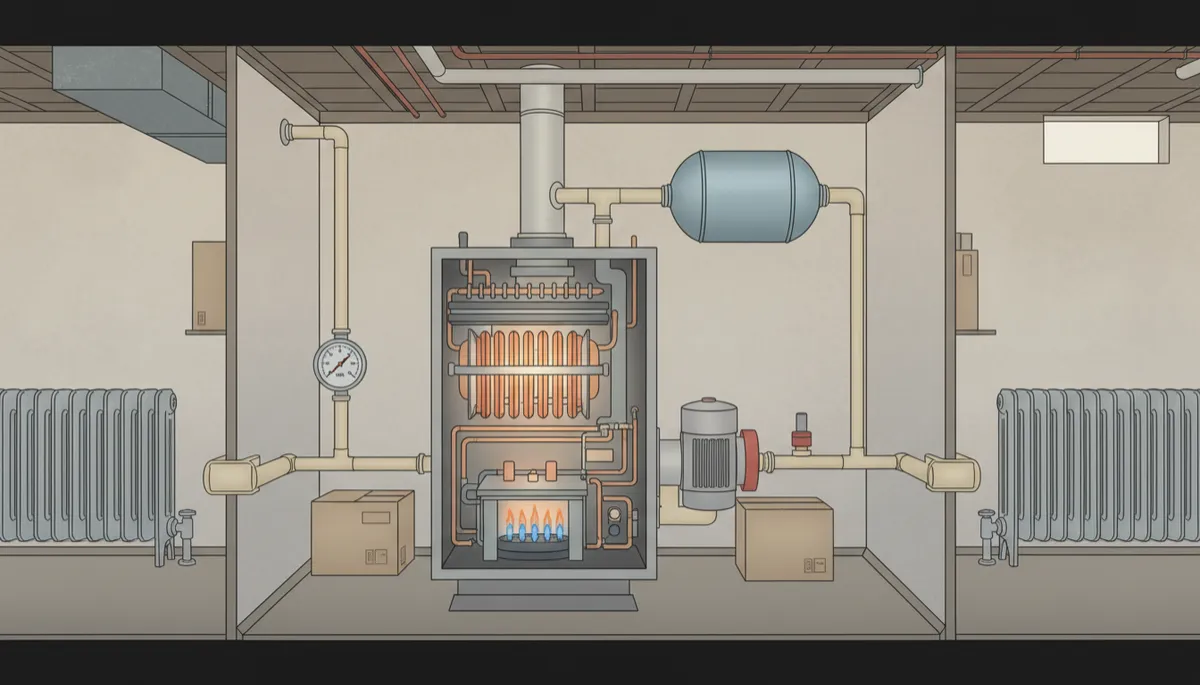
Knowing key boiler components helps homeowners spot issues and describe problems clearly to technicians.
When to Call a Boiler Professional
While there are small tasks handy homeowners can handle, most boiler work should be left to licensed professionals. Boilers involve gas or oil combustion, pressurized hot water, and complex safety controls – not something to experiment with if you are unsure. Here are clear situations when you should call for expert NJ boiler repair or service:
You have no heat, or the boiler will not turn on, even though the thermostat is calling for heat and breakers are not tripped.
The boiler pressure is consistently outside the recommended range, or the pressure relief valve has discharged water onto the floor.
You notice any of the warning signs listed earlier: strange noises, leaks, soot, or a yellow, unstable burner flame.
It has been more than a year since your last annual boiler inspection or tune-up, especially if your boiler is older or has had issues in the past.
💡 Pro Tip: Keep a record of your boiler service Keyport NJ visits and any repairs. A simple folder or digital note helps you and your technician track patterns and plan upgrades or replacements at the right time.
Ready for Winter? Schedule Your Boiler Tune-Up Today
A well-maintained boiler is one of the best investments you can make in your Monmouth County home’s comfort and safety. Regular boiler maintenance NJ not only helps prevent inconvenient breakdowns but can also lower your energy bills and extend the life of your system. Whether you are in Keyport, along the Bayshore, or further inland, staying ahead of boiler issues is far easier – and more affordable – than dealing with an emergency on the coldest night of the year.
If it has been more than a year since your last tune-up, or if any of the warning signs in this guide sound familiar, now is the ideal time to act. A professional boiler tune-up Monmouth County visit typically takes less than a couple of hours, yet it can provide peace of mind for the entire heating season. You will know that your boiler has been inspected, cleaned, and adjusted by a trained technician who understands the unique needs of older NJ homes and modern high-efficiency equipment alike.
For expert boiler service Keyport NJ homeowners can rely on, contact FIXALL Plumbing Heating & Air Condition. Their experienced team is familiar with the full range of residential boiler systems found throughout Monmouth County – from classic cast-iron units to newer high-efficiency models – and can handle everything from routine maintenance to urgent NJ boiler repair calls.
Call FIXALL Plumbing Heating & Air Condition today at (732) 991-2211 to schedule your annual boiler inspection and tune-up. Booking before the first real cold snap means your system will be ready when you need it most – keeping your family warm, your boiler running efficiently, and your energy costs under control all winter long.

