How Do You Prevent Carbon Monoxide Leaks From a Furnace in NJ?
Test every carbon monoxide detector in the house monthly, replace any detector older than its manufacturer’s rated life, which is typically 5 to 7 years, and have your furnace or boiler inspected once a year before heating season. A cracked heat exchanger or a blocked flue can leak carbon monoxide with no smell and no warning, and a working detector is the only thing that will tell you.
Key takeaways
- Carbon monoxide has no smell, color or taste. A detector is the only reliable warning.
- Test detectors monthly and replace them per the manufacturer, typically every 5 to 7 years.
- A cracked heat exchanger and a blocked or disconnected flue are the two most common sources in a heating system.
- A yearly heating inspection with a combustion and flue check catches both before the windows close for winter.
Where does carbon monoxide come from in a home heating system?
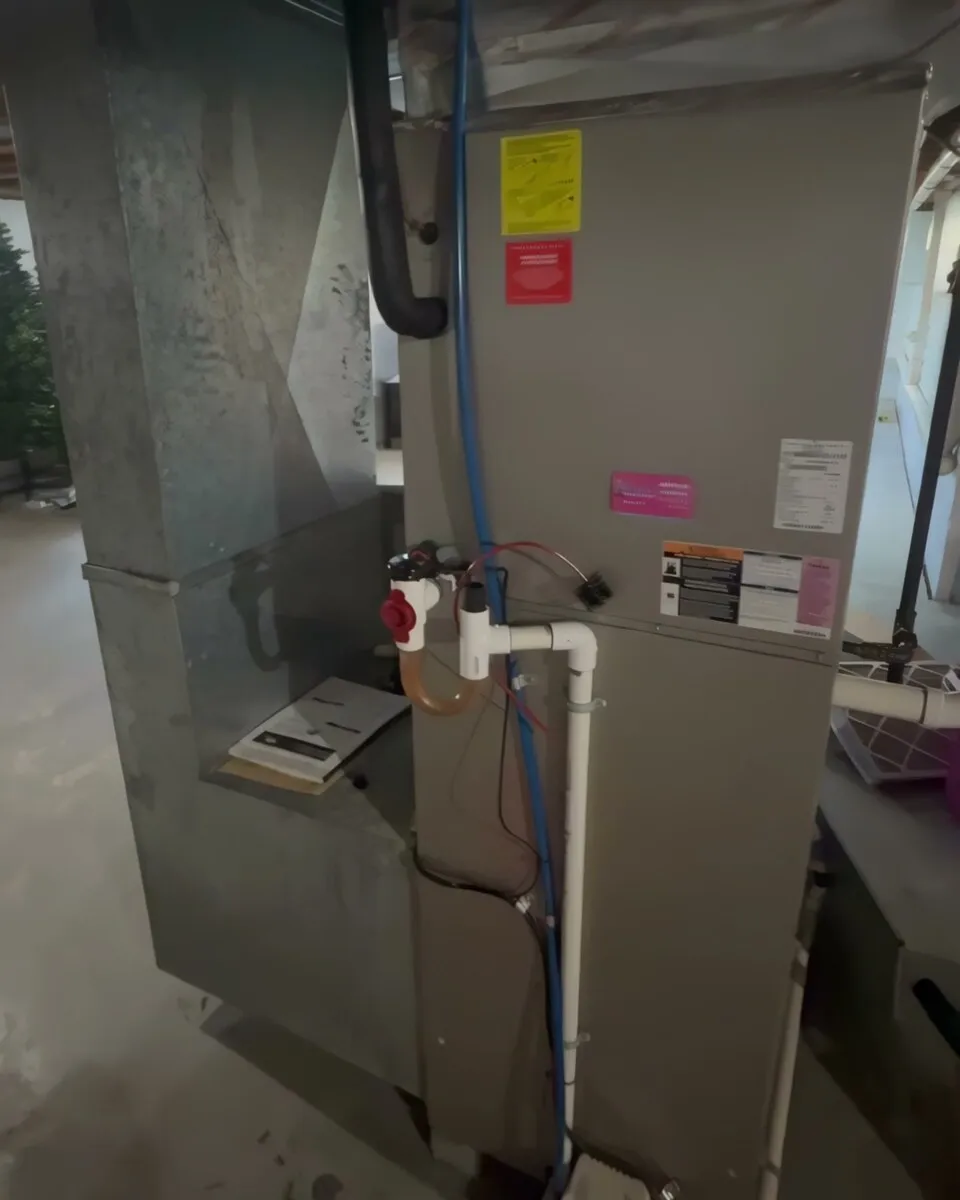
Carbon monoxide comes from fuel that burns without enough air, and in a heating system it reaches your living space when the exhaust path fails. On a furnace, the heat exchanger is the metal wall between the burning gas and the air blowing into your rooms. A crack in that wall lets exhaust into the air stream.
The flue is the second path. A flue blocked by a bird nest, rust scale or a collapsed liner cannot carry exhaust up and out, so it spills back into the basement, and a vent pipe that has rusted through or pulled apart at a joint does the same thing. Boilers, gas water heaters and gas fireplaces share the same risk, since each one burns fuel and vents through a flue.
How often should you test and replace carbon monoxide detectors?
Test every detector once a month with the test button, and replace each one on the schedule its manufacturer sets, which is typically 5 to 7 years. The sensor inside wears out with age even when the test button still beeps, so an old detector can pass the button test and still miss a real leak.
The U.S. Consumer Product Safety Commission recommends a carbon monoxide alarm on every level of the home and outside each sleeping area. Put one near the furnace and water heater too. Write the install date on the back of each new one.
Here is a heating-season checklist to run through this week:
- Press the test button on every carbon monoxide detector in the house
- Check the date on the back of each one and replace any past its rated life or older than 7 years
- Confirm there is a detector on every level and outside the bedrooms
- Look at the flue pipe on the furnace, boiler and water heater for rust, gaps or sagging
- Clear anything stored against the furnace or blocking its air intake
- Schedule a heating inspection if the system has not been checked in the last 12 months
What are the signs of a carbon monoxide problem?
The detector alarm is the sign that matters, and you should treat it as real every time. Other clues around the equipment include soot or rust streaks on the furnace or flue pipe, a pilot light that keeps going out, a burner flame that is yellow or flickering instead of steady blue and unusual condensation on windows near the appliance.
Public health agencies describe early carbon monoxide exposure as headache, dizziness, weakness and nausea, often mistaken for the flu. If the alarm sounds or anyone in the house feels sick in a way that improves outdoors, get everyone outside, call 911 from outside and do not go back in until the fire department clears the house.
What does a FIXALL heating inspection check for carbon monoxide?
Every FIXALL furnace and boiler inspection includes a combustion check and a flue check. The tech inspects the heat exchanger for cracks, confirms the flue and vent piping are intact and clear all the way outside and measures the exhaust to make sure the burner is running cleanly.
The same carbon monoxide safety test is part of every heating tune-up and is included in the FIXALL Comfort Club at $9 a month, alongside the yearly heating or cooling tune-up. If the tech finds a problem, you get the price in writing before any work starts.
What affects the price of fixing a carbon monoxide problem?
It depends on where the leak is coming from. A blocked flue is usually a cleaning or a short section of vent pipe. A disconnected or rusted vent joint is a repair.
A cracked heat exchanger is the expensive one, because on most furnaces it means replacing the furnace. The age of the system, the size of the house and whether the venting or gas line needs updating to current code all affect the replacement price. Financing through Wisetack and Synchrony is available with a soft credit check, and boiler replacements start from $129 per month.
When to call FIXALL
- A carbon monoxide detector has gone off, the fire department has cleared the house and you need the heating system checked before it runs again. Start with furnace repair.
- Your furnace or boiler has not had a combustion and flue check in the last 12 months. Schedule an HVAC tune-up before the first hard freeze.
- You see rust, soot or a gap on the flue pipe, or the burner flame has turned yellow. We serve homes across Monmouth County, including Aberdeen, Matawan and Hazlet.
Frequently asked questions
How often should I replace carbon monoxide detectors?
Follow the date on the back of the unit. Most manufacturers rate a carbon monoxide detector for 5 to 7 years, and the sensor wears out even if the test button still beeps. Test every detector monthly and replace any that is past its date or older than 7 years.
Can a furnace leak carbon monoxide with no smell?
Yes. Carbon monoxide has no smell, no color and no taste, so a cracked heat exchanger or a blocked flue can leak it into the house with no warning. A working detector on every level of the home is the only reliable way to know.
What does a FIXALL heating inspection check for carbon monoxide?
Every furnace and boiler inspection includes a combustion check and a flue check. The tech inspects the heat exchanger for cracks, confirms the flue is clear and venting outside and measures the exhaust to make sure the system is burning cleanly. Anything that needs fixing is quoted upfront before work starts.
Get the system checked before the windows close
Call or text (732) 991-2211, or visit callfixall.com/contact, and a live person will schedule a heating inspection with a combustion and flue check any hour of the day. You get upfront pricing before any work starts, and a straight answer on whether your system is safe to run this winter.

