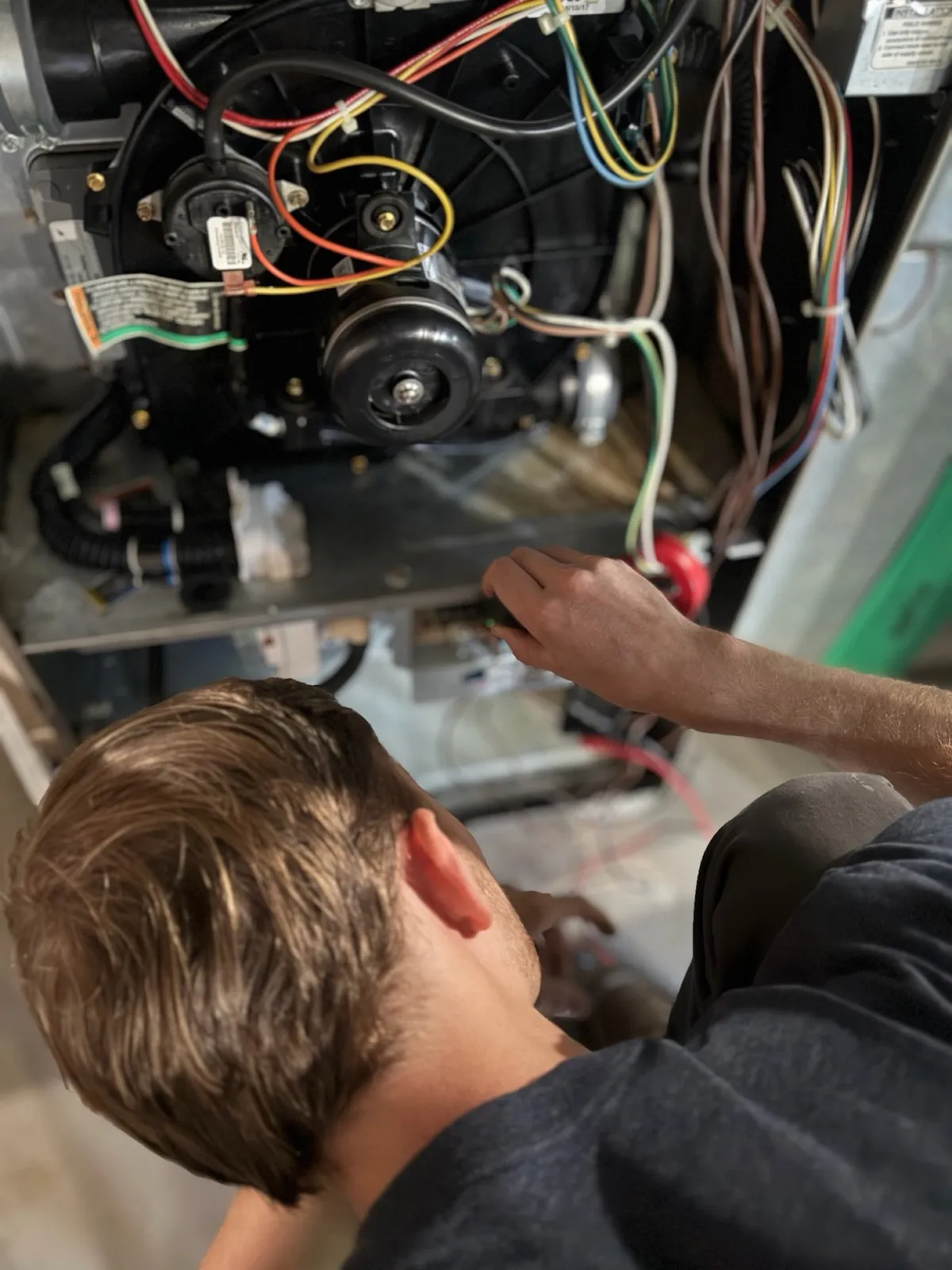
Why Is My Furnace Not Turning On in NJ?
A furnace not turning on usually comes down to one of five things: the thermostat, a switch or breaker that is off, a clogged filter, a loose door panel, or a blocked vent or drain. You can check all five in about 10 minutes. If the furnace still will not start, or it starts and then quits, a part such as the igniter or flame sensor has likely failed, and that is a job for a technician.
Key takeaways
- The thermostat, the power and the filter are the first three things to check when a furnace will not start.
- Most modern furnaces take about 1 to 2 minutes to go from a call for heat to warm air at the vents.
- Press a furnace reset button once at most, because a repeat shutdown means a safety control is doing its job.
- If you smell gas, leave the house first, then call the gas utility or 911 from outside.
What should I check first with a furnace not turning on?
Start at the thermostat and work your way to the furnace. Each check takes a minute or two.
- Thermostat: make sure it is set to Heat, not Off or Cool, and set a few degrees above the room temperature.
- Batteries: a blank or dim thermostat screen often means dead batteries. Put in fresh ones.
- Furnace switch: look for a switch that looks like a light switch on or near the furnace, or at the top of the basement stairs. Make sure it is on.
- Breaker: find the furnace breaker in your panel. If it tripped, reset it once. If it trips again, leave it off and call.
- Filter: slide it out and hold it up to a light. If light barely gets through, replace it.
- Door panel: the blower door has a safety switch, and the furnace will not run if the panel is not fully seated. This often happens after a filter change.
After each fix, give the furnace 2 minutes to go through its start-up. ENERGY STAR suggests checking your filter every month in heavy use seasons and changing it at least every 3 months.
Why does my furnace start, then shut off?
A furnace that starts and then quits is usually being stopped by a safety control. Modern furnaces start in steps: a small draft fan runs, the igniter heats up, the burners light, and the main blower comes on last. The step where it stops is your best clue.
If the draft fan runs but the burners never light, the cause is often a pressure switch, the igniter or the gas supply. If the burners light for a few seconds and go out, a dirty flame sensor is a common reason. If the burners run for a few minutes, shut off and start again, the furnace may be overheating from poor airflow.
After several failed starts, most furnaces lock themselves out. Many have a small light on the control board that blinks a code, and you can often see it through a window in the blower door. Write down the pattern before you call, because it helps a technician find the problem faster.
Could a blocked vent or drain keep my furnace off?
Yes, on a high-efficiency furnace. These units vent through white plastic pipes on the side of the house, and they make water that leaves through a small drain line. A blocked pipe or a clogged drain can trip a safety switch and keep the furnace off.
Walk outside and look at the two pipes. Clear away leaves, drifted snow or anything else you can reach by hand, especially after a windy storm. If you see water pooling around the base of the furnace, or something is stuck deep in a pipe, leave it for a technician.
Is it safe to keep resetting my furnace?
No. Press the reset button once at most, and do not keep flipping the switch off and on to force a restart. Repeated resets can damage parts, and they can hide a real safety problem.
Some situations mean you should stop checking and act right away:
- You smell gas: leave the house, then call the gas utility or 911 from outside. Do not use light switches on your way out.
- A carbon monoxide alarm goes off: get everyone out and call 911.
- You smell burning plastic: turn the furnace off at its switch and call for service. If you see smoke or flames, get everyone out and call 911.
A faint dusty smell on the first run of the season is normal and should fade quickly.
What should I do while I wait for heat?
Keep people warm and protect your pipes. Close doors to rooms you are not using, keep curtains closed at night, and dress in layers.
If it is below freezing outside, the American Red Cross suggests letting cold water drip from faucets on exposed pipes and opening cabinet doors under sinks so warm air can reach the plumbing. If you use a space heater, keep it at least 3 feet from anything that can burn, and turn it off when you leave the room or go to sleep.
Never heat your home with a kitchen oven, a gas stove or a grill. The CDC warns that this can cause carbon monoxide poisoning.
What affects the price of furnace repair?
The price depends on which part failed and how long it takes to find the cause. A dirty flame sensor or a clogged drain line is usually a shorter visit than a failed control board or blower motor.
The age and brand of the furnace matter too, because parts for older units can be harder to find. Some parts may still be under the manufacturer’s warranty, so keep your paperwork handy. Every FIXALL price is in writing before work starts.
The Comfort Club at $9/mo includes a yearly heating or cooling tune-up, a carbon monoxide safety test and 10% off HVAC repairs. To see what a tune-up covers, read our guide to heating tune-ups in NJ.
When to call FIXALL
- You checked the thermostat, power and filter, and the furnace still will not start. FIXALL offers same-day no-heat furnace repair, 24/7.
- The furnace starts and shuts off, blinks a code, or locks out again after one reset.
- The house is getting cold and a freezing night is coming. FIXALL is based in Aberdeen and serves Monmouth County, and a live person answers nights, weekends and holidays.
Call or text (732) 991-2211, or reach us at callfixall.com/contact. You get the price in writing before work starts.
Frequently asked questions
How long should a furnace take to start blowing warm air?
Most modern furnaces take about 1 to 2 minutes from the moment the thermostat calls for heat. The draft fan, igniter and burners all run first, and the main blower comes on last. If nothing happens after a few minutes, go through the basic checks.
Can a dirty filter stop a furnace from working?
Yes. A clogged filter blocks airflow, the furnace overheats, and a safety switch shuts the burners off. Replace the filter and give the furnace a few minutes to cool before you try it again.
Why did my furnace stop on the first cold night of the year?
A furnace that sat all summer can show problems the first time it has to run for a long stretch. Common causes are dead thermostat batteries, a dirty flame sensor, a clogged filter or a worn igniter. A faint dusty smell on the first run is normal, but a furnace that will not start is not.

