How Do You Find and Close the Main Water Shutoff Valve in NJ?
To shut off the water to a house in NJ, find the main water shutoff valve where the water line comes into the home, usually on a basement or crawl space wall on the street side, and close it. A lever handle takes a quarter turn, and a round wheel turns clockwise until it stops. Once you know where it is, the job takes under a minute, and that minute can save your floors, walls and belongings.
Key takeaways
- The main shutoff is usually where the water line enters the house, often near the water meter.
- A lever handle is closed when it sits across the pipe, and a wheel handle closes clockwise.
- After you close the main, open a faucet on the lowest floor to drain the pressure from the pipes.
- A valve that is stuck or crusted over should be replaced before you need it, not during a leak.
Where is the main water shutoff valve in a NJ house?
It is usually where the water line comes into the house, and that line normally comes from the street. Start by looking along the wall that faces the street, then follow the pipe. Here is where to check, in order:
- Basement: on or near the front wall, close to the water meter.
- Crawl space: near where the pipe comes through the foundation.
- Home with no basement: a utility closet, the garage, or near the water heater.
- Home on a well: near the pressure tank, on the line that feeds the house.
If there are valves on both sides of the water meter, use the one on the house side. The meter belongs to your water utility, so leave it alone. If you still cannot find the valve, check your home inspection report, since many inspectors note the location, or ask your water utility.
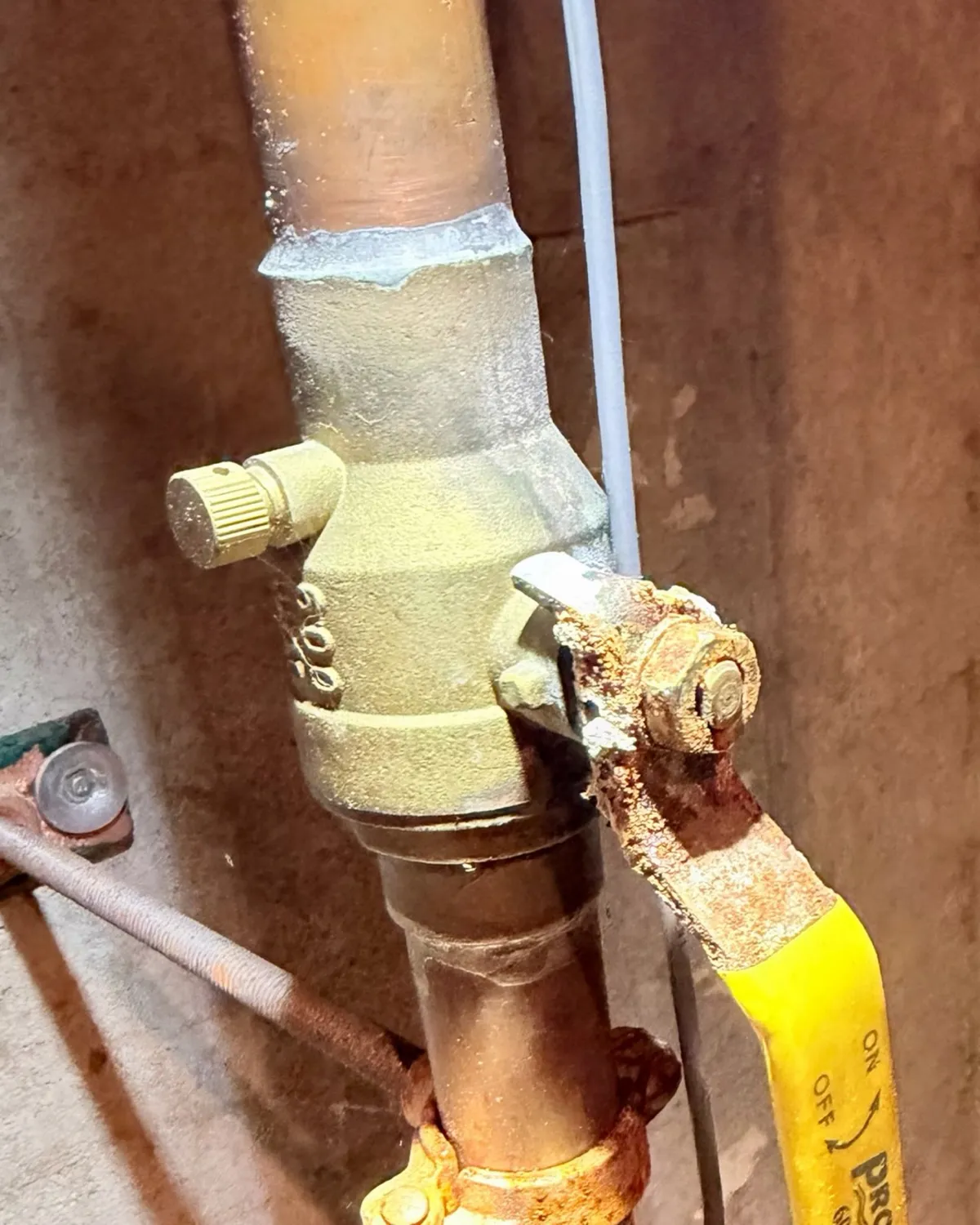
Make sure you have the right valve. A bell-shaped brass fitting on the line is often a pressure reducing valve, not a shutoff.
Never turn a valve on a gas line. Gas pipe is often black iron and runs to your furnace, water heater or stove. Many gas valves have yellow handles, but so do some water valves, so follow the pipe to be sure.
How do I close the main water valve?
Turn it slowly and firmly by hand until the water stops. On a lever handle, or ball valve, move the handle a quarter turn so it sits across the pipe. On a round wheel handle, or gate valve, turn clockwise until it stops, which can take several turns.
Next, open a faucet on the lowest floor of the home. This lets the water left in the pipes drain out, so a leak slows down and stops sooner. Open one upstairs faucet as well if you need the pipes to empty faster.
If water has reached the floor, keep away from standing water near outlets, cords or appliances. Your safety comes before any cleanup.
What if the valve is stuck or will not close all the way?
Stop and do not force it. Older gate valves often seize up after years of sitting still, and a stem can snap off if you lean on it with a wrench. A broken valve is much worse than a stiff one.
If water is running and the valve will not move, call your water utility and an emergency plumber right away. The street valve usually belongs to the utility and needs a special tool, so do not try to open the curb box yourself. In the meantime, catch what water you can and move what you can.
A wheel valve that slows the water but will not fully stop it is worn out inside. A plumber can replace it with a quarter-turn ball valve, which is easy to close and much less likely to seize.
Should I use the main valve or the small valve near the leak?
Use the small valve if the leak is at one fixture, and use the main for everything else. Most toilets, sinks and washing machines have their own shutoff valves. Water heaters usually have one on the cold water line above the tank.
Those small valves let you keep the rest of the house running. For a burst pipe, a leak inside a wall or ceiling, or water you cannot trace, go straight to the main. To sort out what can wait until morning, see what counts as a plumbing emergency.
What do I do after the water is off?
Call for the repair, and leave the main closed until the leak is fixed. For a short shutoff, your water heater and hot-water boiler can usually stay on as long as they stay full of water. A water heater should not keep heating if its tank has been drained, so ask a plumber if you think it emptied.
When the leak is fixed, open the main slowly, a little at a time. Leave a faucet running until the air clears and the water flows smoothly, then close it. Walk the house and look for new drips.
How do I make sure the valve works before an emergency?
Test it once a year, on a day when you are home and could reach a plumber. Close it gently, open a faucet to confirm the water stopped, then open the valve again. If it is stiff or starts to drip at the stem, stop and have it looked at.
While you are there, hang a tag on the valve, clear away boxes in front of it, and show everyone at home where it is. Anyone old enough to stay home alone should know how to close it.
What affects the price of replacing a main shutoff valve?
The price depends on the type and size of the valve, the kind of pipe it connects to, and how easy it is to reach. Copper is often simpler to work on than old galvanized pipe, which may need more of the line replaced.
The water has to be off at the street or the meter for this job, so the plan may need to include your water utility. A valve in a finished wall or a tight crawl space adds time. Every FIXALL price is in writing before work starts.
When to call FIXALL
- Water is running and you cannot find or close the valve. Call our emergency plumber line, where a live person answers 24/7.
- Your valve is seized, crusted over, leaking at the stem, or will not fully stop the water.
- You have looked and cannot find it. FIXALL serves Hazlet and towns across Monmouth County, and a tech can help you locate it.
Call or text (732) 991-2211, or reach us at callfixall.com/contact. You get the price in writing before work starts.
Frequently asked questions
Which way do I turn a main water shutoff valve?
A lever handle takes a quarter turn, and the valve is closed when the handle sits across the pipe. A round wheel handle turns clockwise until it stops, which can take several turns.
Can I shut off the water at the street myself?
It is best not to. The valve at the street or curb usually belongs to your water utility and needs a special tool. If your house valve will not work, call the utility or an emergency plumber.
Is it safe to shut off the water with the water heater on?
Yes, for a short shutoff when the tank stays full. A water heater should not keep heating if its tank has been drained, so if the tank may have emptied, ask a plumber before you turn things back on.

