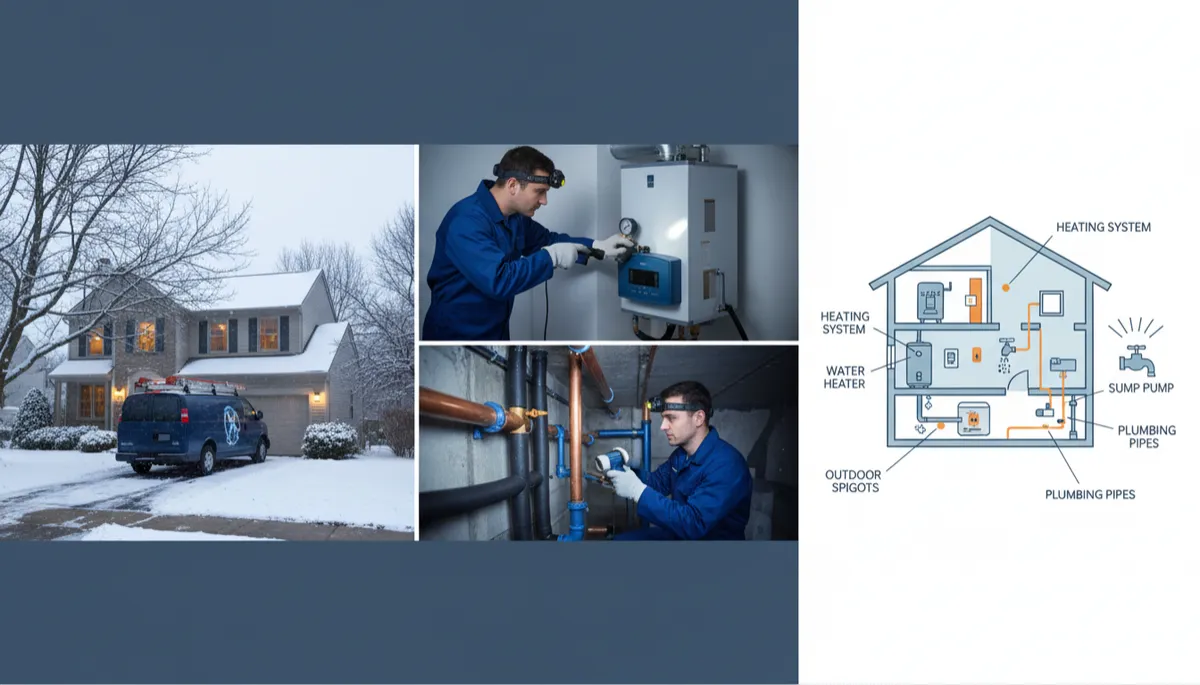
NJ Winter Home Prep: Plumbing & Heating Guide
Plumbing, Heating, Winter Home Prep NJ, Monmouth County
The Complete NJ Winter Home Prep Guide for Plumbing and Heating
A definitive, step‑by‑step winter home prep NJ checklist from the perspective of a Monmouth County licensed master plumbing company and HVAC team, tailored specifically for New Jersey winters.
Why NJ Homes Need Serious Winter Plumbing and Heating Prep
New Jersey winters are unpredictable. Monmouth County can see mild 40‑degree days followed by sudden Arctic blasts that drop temperatures into the teens overnight. That freeze–thaw cycle is exactly what stresses plumbing, heating systems, and building materials. When homeowners skip proper winter home prep NJ steps, the result is often frozen pipes, failed boilers, flooded basements, and unsafe heating emergencies at the worst possible time.
Local agencies such as the Monmouth County Health Department emphasize insulating exposed pipes, allowing vulnerable faucets to drip, and knowing where your main shut‑off valve is before a cold snap hits (co.monmouth.nj.us). Combined with a thorough winter HVAC checklist New Jersey and targeted plumbing winterization, these measures dramatically reduce your risk of costly damage and unsafe conditions in your home.
This complete winter home guide NJ focuses on the essentials a Monmouth County homeowner needs: heating system prep, pipe winterization, water heater care, sump pump readiness, outdoor plumbing protection, indoor thermostat and humidity settings, and when to bring in a licensed professional like FIXALL Plumbing Heating & Air Condition for a comprehensive winterization visit.
1. Heating System Prep: Your NJ Winter HVAC Checklist
Before you rely on your furnace or boiler every day, take time in early fall to walk through a structured winter HVAC checklist New Jersey homeowners can follow:
Test the system on a mild day. Switch your thermostat to heat and raise the setpoint 3–5 degrees. Let the system run 15–20 minutes. You should feel steady, warm air or evenly heating radiators without banging, screeching, or frequent short cycling.
Replace or clean air filters. A dirty filter strains the blower, reduces comfort, and increases energy bills. Most NJ homes should check filters monthly and replace them at least every 60–90 days during heating season.
Inspect vents and radiators. Make sure supply and return registers are not blocked by furniture, curtains, or rugs. Bleed air from hot water radiators if they are warm only at the bottom or gurgle when heating.
Check safety devices. Test smoke and carbon monoxide detectors and install fresh batteries. Monmouth County specifically highlights CO detector testing as a winter safety essential because heating equipment runs for long hours (co.monmouth.nj.us).
A professional tune‑up should be scheduled in October or early November. During this visit, a licensed HVAC technician will inspect the heat exchanger for cracks, test combustion efficiency, verify gas pressure and flame quality, and confirm that all safety controls operate correctly. This is not just about comfort; it is about preventing carbon monoxide issues and emergency breakdowns in the middle of a Nor’easter.
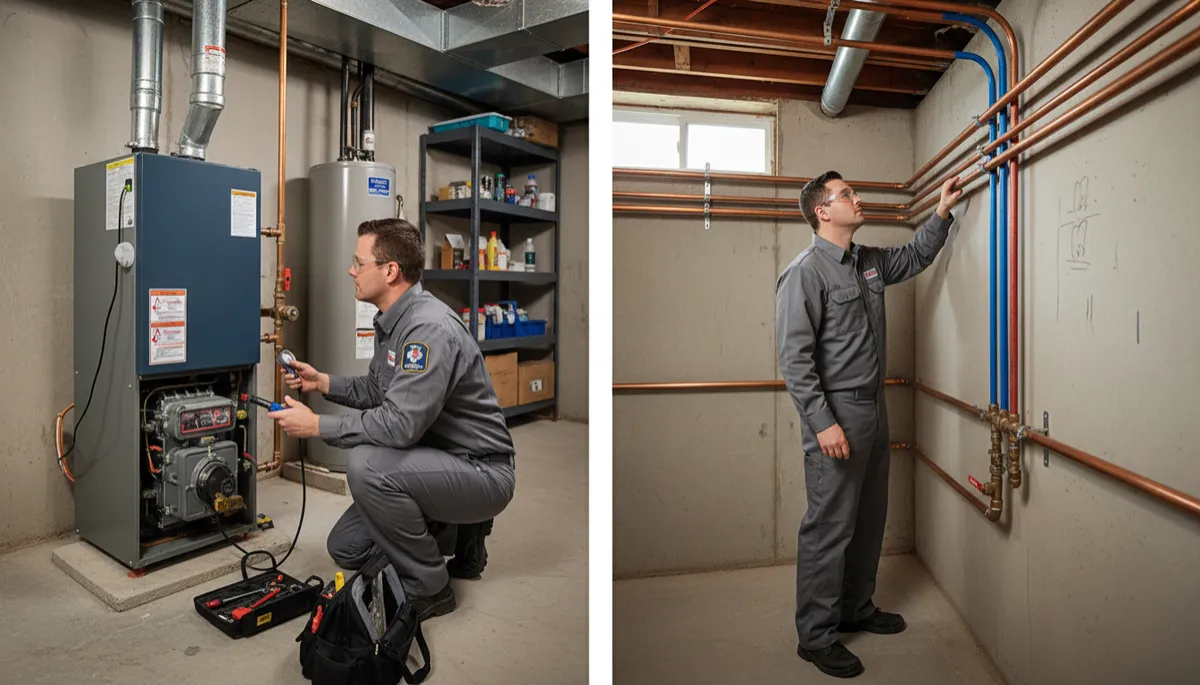
A combined plumbing and HVAC inspection catches hidden issues before deep winter arrives.
2. Pipe Winterization: Protecting Your Home from Freezing and Bursts
When temperatures drop below freezing, unprotected pipes—especially in crawlspaces, garages, and exterior walls—are at serious risk. Local guidance for plumbing winterization Monmouth County stresses a few core practices (co.monmouth.nj.us) that every homeowner should implement:
Insulate exposed pipes. Use foam sleeves or fiberglass wrap on pipes in unheated areas. For a budget‑friendly option, the county even notes that newspaper and plastic sheeting can add short‑term insulation in a pinch.
Seal drafts near plumbing. Caulk gaps around windows, sill plates, and penetrations where cold air can blow directly onto pipes. Even a small draft can freeze a pipe during a prolonged cold snap.
Open cabinets on very cold nights. For sinks on exterior walls, keep cabinet doors open so warm room air can circulate around supply lines, a practice specifically recommended by Monmouth County for older homes (co.monmouth.nj.us).
Allow vulnerable faucets to drip. A slow drip keeps water moving, making it harder for pipes to freeze. Focus on lines that run through unheated spaces or exterior walls.
One of the most critical NJ winter plumbing tips is to know where your main shut‑off valve is located. If a pipe does burst, shutting the water off quickly can be the difference between a minor cleanup and extensive structural damage. Never use open flames or torches to thaw frozen pipes; shut the water off and call a licensed plumber instead, as the county explicitly warns (co.monmouth.nj.us).
3. Water Heater Maintenance for Reliable Hot Water All Winter
Your water heater works harder in winter as incoming water temperatures drop. Proper maintenance improves efficiency and helps prevent mid‑season failures when you rely most on hot showers and dishwashing. As part of your winter home prep NJ plan, take these steps:
Flush sediment. Over time, minerals settle at the bottom of the tank, forcing the burner or elements to work harder. Draining a few gallons from the tank annually, as many experts recommend, helps maintain efficiency and extend equipment life.
Check temperature settings. Set the thermostat around 120°F. This is hot enough for comfort and sanitation but reduces scalding risk and unnecessary energy use. Higher settings can also accelerate tank wear and mineral buildup.
Inspect for leaks and corrosion. Look around the base of the tank and connections for moisture, rust, or white mineral deposits. Catching small leaks early is far less expensive than cleaning up a full tank failure in the middle of winter.
During a professional winterization visit, a licensed plumber can also test the temperature and pressure relief valve, verify proper venting on gas units, and recommend whether it is time to consider replacement based on age and condition. For many Monmouth County homes with older heaters, proactive replacement can be more cost‑effective than repeated emergency service calls.
4. Sump Pump Readiness: Keeping Your Basement Dry
Winter in New Jersey brings not only snow, but also rain, rapid melts, and saturated ground. If your home has a basement or crawlspace, your sump pump is a critical line of defense against flooding. Including it in your complete winter home guide NJ checklist is essential, especially in low‑lying or coastal areas of Monmouth County.
Test the pump. Pour a bucket of water into the sump pit and confirm the pump activates quickly, discharges water, and then shuts off. Any hesitation, strange noises, or failure to run warrants immediate service.
Inspect discharge lines. Make sure the discharge pipe outside is clear of debris, ice, and snow, and that it slopes away from the foundation. A blocked discharge can send water right back toward your home or burn out the pump motor.
Consider backup options. Battery‑backup or water‑powered backup pumps provide extra protection if a storm knocks out power while groundwater is rising.
A quick sump pump check is one of the most cost‑effective winterization steps you can take to prevent thousands of dollars in water damage and mold remediation later.
5. Outdoor Plumbing: Hoses, Spigots, and Irrigation Systems
Outdoor plumbing is exposed directly to freezing air and wind, which is why plumbing winterization Monmouth County guidelines strongly emphasize exterior protection (co.monmouth.nj.us). Add these steps to your NJ winter plumbing tips checklist:
Disconnect and store garden hoses. Leaving hoses attached traps water in the faucet and supply line, which can freeze and split the pipe inside the wall. Drain hoses and store them in a shed or garage.
Shut off and drain outdoor spigots. Close the interior shut‑off valve for each exterior hose bib, then open the outside faucet to let remaining water drain. Consider adding insulated faucet covers for extra protection.
Winterize irrigation systems. For homes with in‑ground sprinklers, Monmouth County providers recommend scheduling a compressed‑air blowout between mid‑October and mid‑November, before the first hard freeze, with earlier bookings for large multi‑zone estate systems (coastalmistirrigation.com).
Properly draining and shutting down these outdoor lines prevents cracked backflow preventers, burst piping, and springtime leaks that can be expensive to locate and repair.
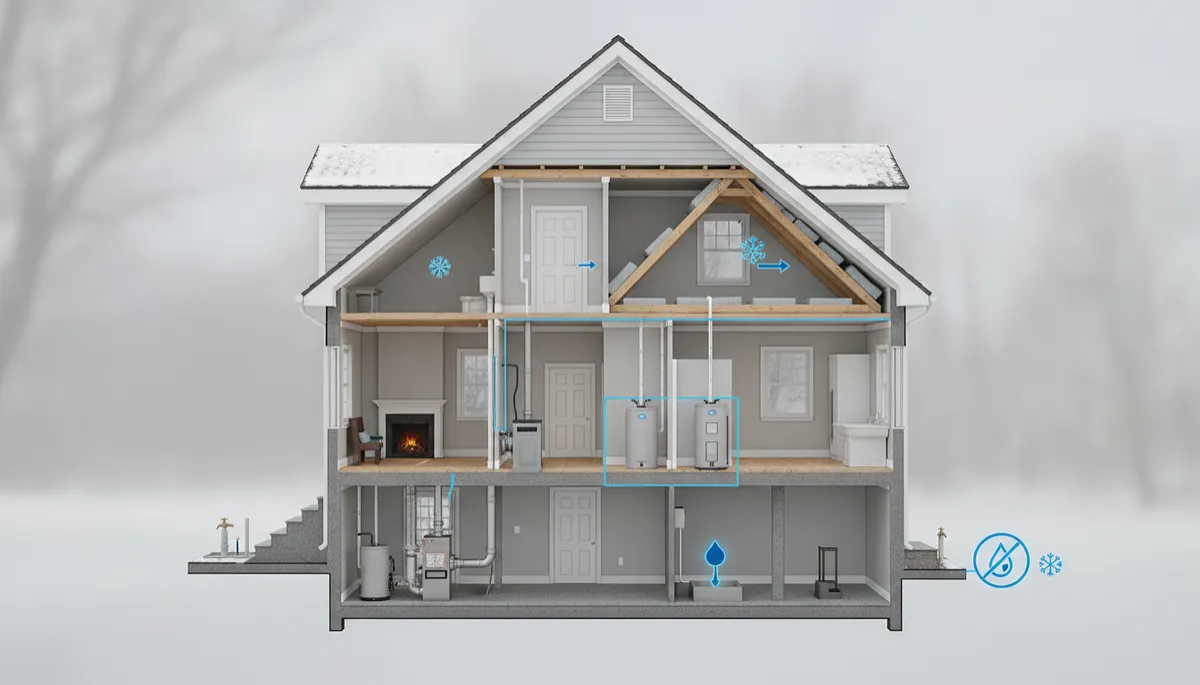
A whole‑home view ensures no critical plumbing or heating component is overlooked.
6. Indoor Thermostat and Humidity Settings for Comfort and Protection
Your thermostat and humidity levels do more than control comfort; they also protect your plumbing, finishes, and indoor air quality throughout the winter. As part of your winter home prep NJ routine, review these settings before the first prolonged cold spell:
Maintain a safe minimum temperature. Keep your home at or above 55°F even when you are away for a weekend. In older or drafty homes, 60°F is safer to prevent pipes in colder areas from freezing, especially near exterior walls and in basements.
Use programmable or smart thermostats wisely. Moderate setbacks of 3–5 degrees when you are asleep or away can save energy without letting the structure and plumbing get too cold. Avoid deep setbacks during extreme cold snaps.
Balance indoor humidity. Aim for roughly 30–40% relative humidity in winter. Too dry and you will notice static, dry skin, and shrinking woodwork; too humid and you risk condensation on windows and potential mold. Whole‑home humidifiers or portable units can help stabilize levels.
Proper thermostat and humidity management reduce stress on both your heating system and building materials, contributing to longer equipment life and fewer winter comfort complaints.
7. Scheduling Professional Service: When to Call a Licensed Expert
While many checklist items are homeowner‑friendly, there is no substitute for a licensed professional who understands both plumbing and HVAC systems in New Jersey’s specific climate. Local agencies explicitly recommend professional inspections of heating equipment before winter and advise calling a licensed plumber rather than attempting risky DIY thawing or repairs (co.monmouth.nj.us).
Schedule early. Book your comprehensive winterization visit in September or October, before the first hard freeze and before service calendars fill with emergency calls.
Combine plumbing and heating checks. A coordinated visit that covers boilers or furnaces, water heaters, visible plumbing, sump pumps, and outdoor lines is more efficient and ensures nothing is overlooked.
Document findings and recommendations. Keep records of tune‑ups, repairs, and upgrades. This helps plan future replacements and can support insurance claims if a weather‑related issue occurs.
Make This Winter the Safest and Most Comfortable Yet
A well‑prepared New Jersey home weathers winter storms with minimal stress: pipes stay unfrozen, basements stay dry, and heating systems run safely and efficiently. By following this complete winter home guide NJ —covering heating system prep, pipe winterization, water heater maintenance, sump pump readiness, outdoor plumbing protection, and smart thermostat and humidity settings—you dramatically lower your risk of mid‑season emergencies and surprise repair bills.
If you would like a licensed Monmouth County professional to handle the details, FIXALL Plumbing Heating & Air Condition offers comprehensive winter home prep services tailored to NJ homes and weather patterns. We inspect your boiler or furnace, review your winter HVAC checklist New Jersey items, evaluate exposed plumbing, test your sump pump, and verify that outdoor lines and fixtures are properly winterized—all in a single coordinated visit.
Do not wait for the first deep freeze or the first burst pipe to find out something was missed. Call FIXALL Plumbing Heating & Air Condition at (732) 991‑2211 today to schedule your complete winter home prep NJ appointment and head into the season with confidence that your plumbing and heating systems are truly ready.

