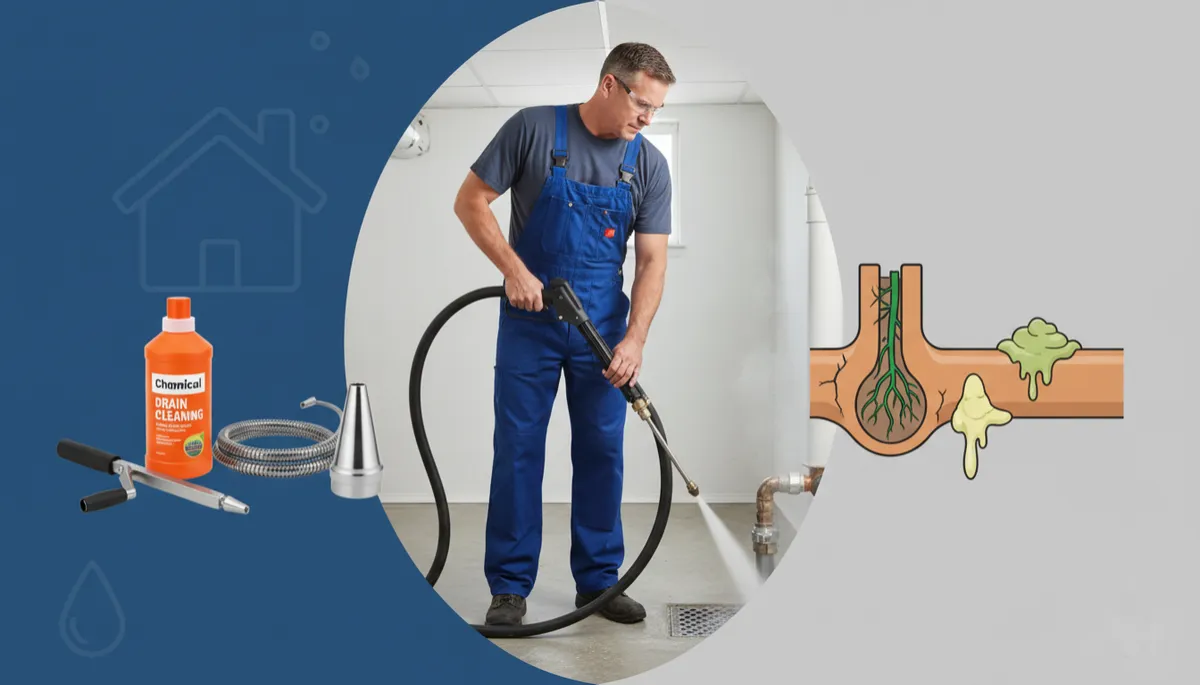
Professional Drain Cleaning vs. DIY: What Works?
Plumbing, Drain Cleaning Monmouth County
Professional Drain Cleaning vs. DIY: What Really Works?
Slow or clogged drains are more than an inconvenience for Monmouth County homeowners—they can signal serious plumbing issues below the surface. Before you reach for another store-bought chemical or a bargain drain snake, it is worth understanding the real difference between DIY fixes and professional drain cleaning in NJ, especially when the health of your home’s plumbing system is on the line.
The True Cost of DIY Drain Cleaning Gone Wrong
From the outside, DIY drain cleaning looks inexpensive: a $10 bottle of chemical cleaner, a discount-store hand snake, maybe a plunger. But after years of plumbing work across Monmouth County, our team has seen the hidden costs when these quick fixes go wrong—damaged pipes, sewer backups, ruined flooring, and emergency after-hours calls that cost far more than proper maintenance would have in the first place.
Chemical cleaners can weaken older pipes, especially galvanized or thin-wall PVC. Misused hand snakes can puncture or crack fragile drain lines. Worse, DIY attempts often only poke a small hole through a blockage rather than fully clearing it. The drain might run for a week or two, but the clog quickly reforms—now larger and more compacted. By the time a clogged drain NJ plumber is called, the issue has escalated into a partial or full sewer line obstruction, sometimes requiring excavation or extensive repairs.
When you factor in repeated trips to the store, wasted time, lingering odors, and the risk of water damage or sewage exposure, the “cheap” DIY route can easily become the most expensive option. Professional drain cleaning Monmouth County homeowners rely on is designed to address the root cause—not just the symptom—so the problem stays solved longer.
Chemical Drain Cleaners: Quick Fix or Hidden Risk?
Chemical drain cleaners are heavily marketed as a fast, easy solution for slow drains. They work by using caustic or acidic reactions to break down hair, soap scum, and grease. In reality, they are one of the least effective and most damaging options for long-term drain health, particularly in older Monmouth County homes with aging piping systems and mixed materials.
Limited effectiveness: Chemicals may partially dissolve soft buildup but rarely remove the entire obstruction, especially if the clog contains solid objects, heavy grease, or tree roots.
Pipe damage risk: Repeated use can corrode metal pipes, soften certain plastics, and damage rubber seals, leading to leaks and premature pipe failure.
Safety concerns: The fumes are harsh, and splashes can burn skin or eyes. If a plumber later needs to open the line, residual chemicals can create a hazardous work environment.
From a professional standpoint, I rarely recommend chemical cleaners for any drain cleaning Monmouth County homeowners need, beyond perhaps a one-time treatment for a mild bathroom sink slowdown. If you find yourself reaching for chemicals more than once a year, you are not solving the issue—you are masking it and potentially harming your plumbing in the process.
Manual Snaking: Helpful DIY Tool with Real Limits
A handheld drain snake can be a useful DIY tool when used correctly. For simple clogs close to a fixture—like hair in a bathroom sink trap or a small obstruction in a tub drain—a basic snake can often restore flow. Many Monmouth County homeowners feel comfortable attempting this, and in some cases, it is reasonable to try before calling a professional drain cleaning NJ specialist.
Where manual snaking can work: Short, accessible lines such as sink traps, tub drains, and some first-floor toilet clogs without a history of backups.
Common DIY mistakes: Forcing the cable, running it in the wrong direction, or using an undersized snake that only drills a narrow path through the clog instead of clearing it fully.
Risk to toilets and fixtures: Aggressive use can scratch porcelain, damage internal toilet passages, or catch and crack fragile fittings.
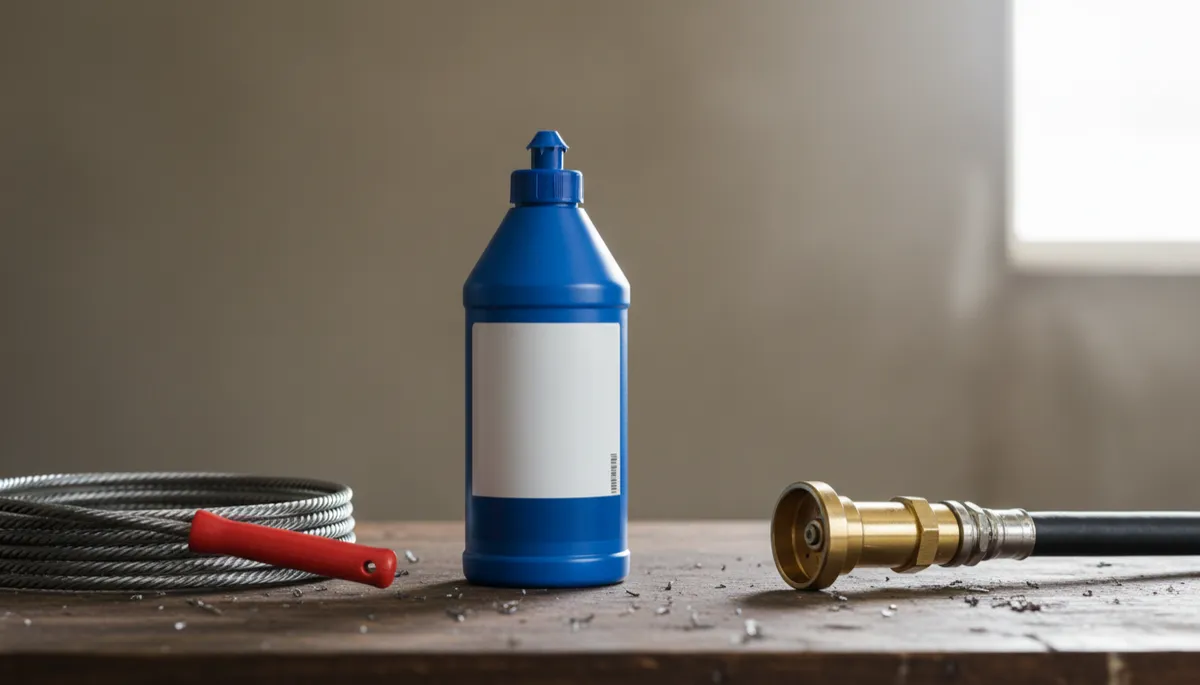
Different drain tools solve different problems; choosing wrong can waste time and money.
When comparing a drain snake vs hydro jet, it is important to understand that a hand snake is primarily a mechanical puncture tool. It can break through soft blockages but does very little to scour pipe walls or remove heavy buildup. If your clog is deeper in the system, involves multiple fixtures, or returns quickly after snaking, it is time for professional-grade equipment and expertise.
Professional Snaking: More Power, More Reach, Better Diagnostics
Professional drain cleaning in NJ often begins with powered snaking equipment. Unlike small DIY tools, these machines use heavy-duty cables and specialized cutting heads to reach farther into the line and remove more stubborn obstructions. When performed by an experienced clogged drain NJ plumber, professional snaking is both more effective and safer for your pipes than most homeowner attempts.
Greater range: Professional machines can reach main drain lines, branch lines, and even the sewer lateral that runs from your home to the street connection.
Interchangeable heads: Different cutting tips are used for grease, hair, scale buildup, or minor root intrusion, allowing a tailored approach to each clog.
Diagnostic insight: The way the cable behaves—where it binds, how it returns—gives the plumber clues about pipe condition, offsets, or possible breaks.
Professional snaking is often the first step for severe clogs or backups, and in many cases, it restores normal flow effectively. However, it still has limitations: it may not fully remove thick grease layers, heavy scale, or extensive tree root systems. That is where hydro jetting New Jersey homeowners are increasingly choosing becomes the superior option.
Hydro-Jetting: Deep Cleaning for Stubborn and Recurring Clogs
Hydro-jetting uses high-pressure water streams delivered through a specialized nozzle to thoroughly scour the inside of your drain and sewer lines. Instead of just punching a hole through the clog, hydro-jetting cleans the full diameter of the pipe, removing buildup that has accumulated over years. For many main line issues in Monmouth County, it is the most effective long-term solution available.
Comprehensive cleaning: Hydro jets cut through grease, sludge, scale, and even small to moderate tree roots, restoring pipe capacity close to its original state when conditions allow.
Preventive benefit: Because the pipe walls are cleaned, new debris has less to cling to, reducing the frequency of future clogs compared with standard snaking.
Ideal for recurring problems: Homes with repeated main line backups, heavy kitchen grease use, or known root intrusion often see dramatic improvement after professional hydro-jetting.
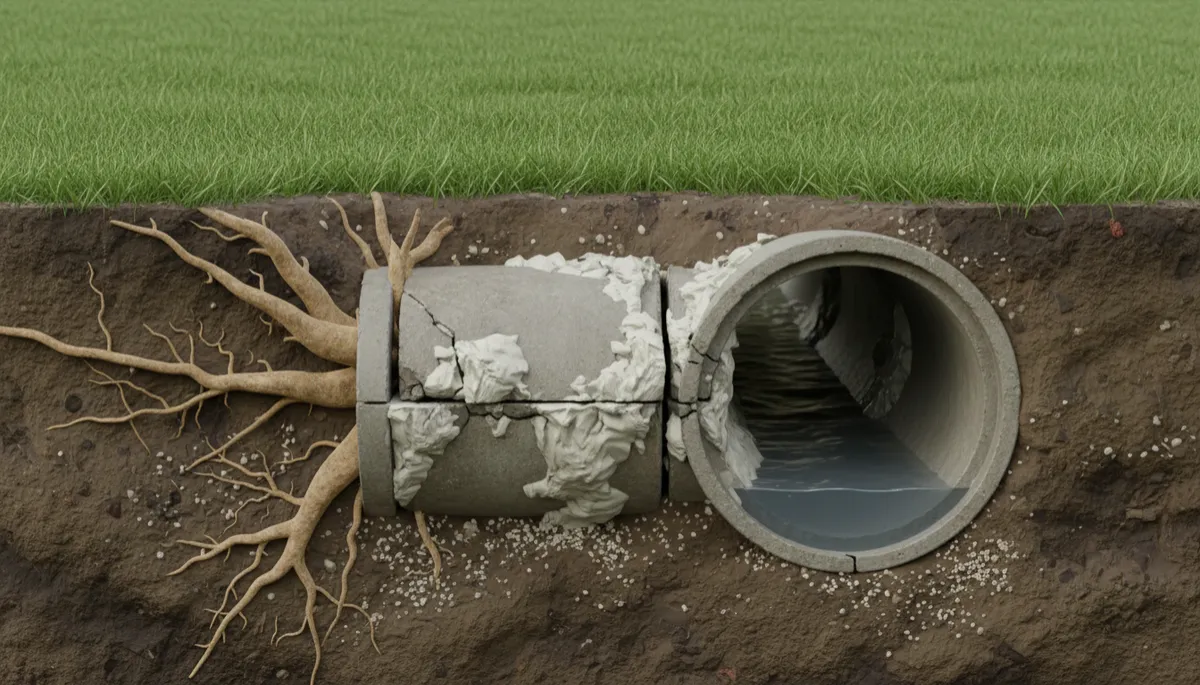
Roots and grease slowly choke pipes; hydro-jetting can often restore vital flow.
When comparing drain snake vs hydro jet, think of snaking as a short-term opening and hydro-jetting as a deep cleaning. Both have their place, and an experienced plumber will recommend the right method based on pipe material, age, and the nature of the blockage. For many older properties in Monmouth County with mature trees and long sewer laterals, hydro-jetting is often the most reliable way to get ahead of chronic clogs.
When Is DIY Acceptable, and When Should You Call a Pro?
Not every slow drain requires professional drain cleaning Monmouth County service. For minor, isolated issues, a careful DIY approach can be reasonable. The key is knowing your limits—and recognizing warning signs that indicate a deeper problem that needs expert attention and professional equipment.
Reasonable DIY Situations
A single bathroom sink draining slowly for the first time, likely from hair and soap scum.
A tub or shower drain with visible hair near the strainer or in the trap.
A kitchen sink that has never backed up before, where you can access and clean the P-trap and use a small hand snake with care.
📌 Key Takeaway: If a clog is new, isolated to one fixture, and you can see or easily reach the blockage, cautious DIY may be appropriate. Anything more than that deserves a professional assessment.
Situations That Call for a Professional Plumber
Multiple fixtures backing up at once, especially on the lowest level of the home—often a sign of main line issues.
Sewage odors, gurgling sounds, or water appearing in a tub or shower when you run a sink or flush a toilet.
Standing water that will not drain at all, even after basic DIY attempts, or water backing up from floor drains.
Any history of tree root intrusion, collapsed lines, or previous major sewer repairs on the property.
In these cases, continuing to experiment with chemicals or small snakes can worsen the condition, delay proper treatment, and increase the risk of a full backup. Calling a professional clogged drain NJ plumber early often saves money and avoids property damage.
Recurring Drain Problems: Your Plumbing’s Warning Light
A drain that clogs once may be a simple nuisance. A drain that clogs repeatedly is your plumbing system’s warning light. Recurring issues suggest that something more serious is happening: grease and sludge narrowing the main line, scale buildup in older cast-iron pipes, tree roots entering through joints, or sections of pipe that have sagged or collapsed over time—problems common in established Monmouth County neighborhoods.
If you find yourself clearing the same kitchen sink every few months, plunging the same toilet repeatedly, or dealing with annual main line backups, it is time to move beyond temporary fixes. Professional drain cleaning Monmouth County services, including camera inspections and hydro jetting New Jersey homeowners trust, can identify the true cause and provide a plan to correct it before a small inconvenience turns into a major emergency.
💡 Pro Tip: Treat recurring clogs like you would a recurring leak in your roof. Addressing the underlying issue early is almost always less expensive than waiting for a full failure.
Ready for a Lasting Fix? Call FIXALL Plumbing Today
Whether you are dealing with a slow kitchen sink, a stubborn bathroom clog, or a main sewer line backing up into your basement, you do not have to keep guessing. As a licensed master plumbing company serving Monmouth County, FIXALL Plumbing provides honest evaluations and the right solution for your specific situation—whether that is straightforward snaking, advanced hydro-jetting, or a targeted repair to damaged piping.
If you are tired of repeat clogs, chemical cleaners that do not last, and DIY attempts that only offer temporary relief, it is time to invest in professional drain cleaning in NJ that actually works. We understand local soil conditions, common pipe materials in Monmouth County homes, and the way tree roots, grease, and everyday use affect your system over time. Our goal is simple: restore your drains to proper function and help keep them that way as long as possible.
For reliable, expert drain cleaning Monmouth County homeowners can count on, schedule service with FIXALL Plumbing today. Call (732) 991-2211 to speak directly with a licensed professional, discuss your symptoms, and book an appointment that fits your schedule. Let us diagnose the real problem and provide a solution that protects your home, your time, and your budget.

