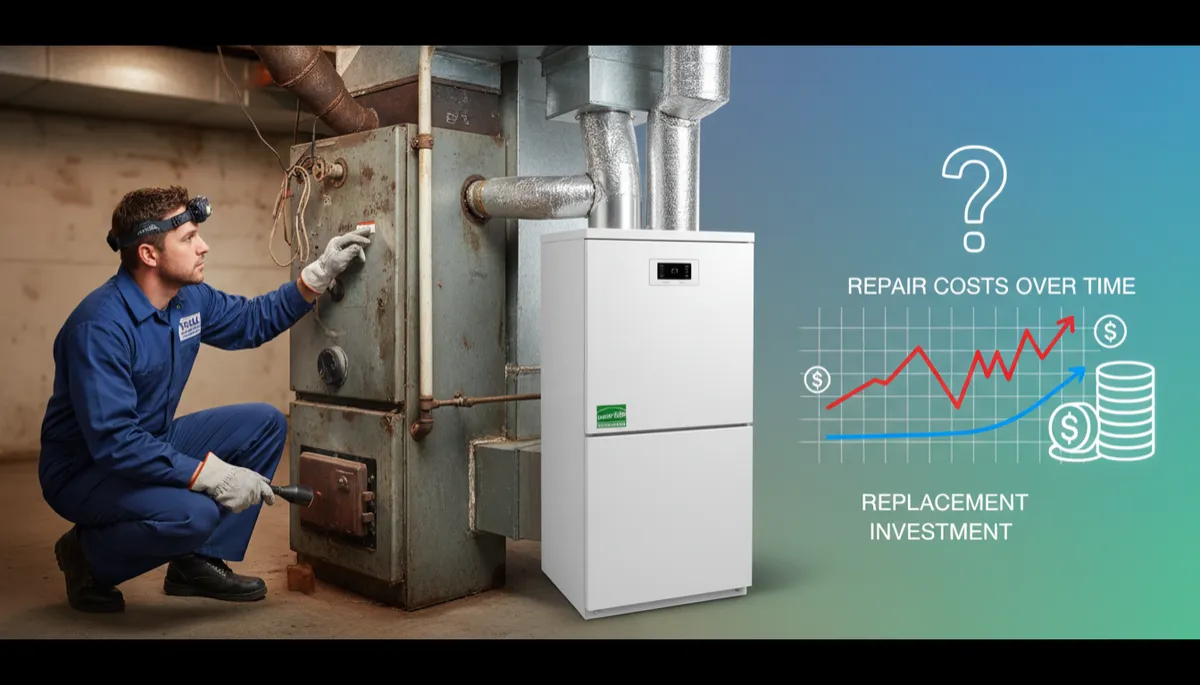
Repair or Replace Your Heating System in NJ
HVAC, Heating System Replacement, Monmouth County NJ
Repair or Replace? How to Know When Your Heating System Is Done
Deciding between another repair and a full heating system replacement is one of the biggest home comfort choices a New Jersey homeowner makes. As Monmouth County HVAC specialists, we regularly help families weigh the true costs, risks, and benefits of keeping an older system alive versus investing in a modern, energy-efficient upgrade. The right answer depends on more than just today’s repair bill—it involves your system’s age, reliability, operating costs, refrigerant type, and the rebates and financing currently available in NJ. This guide walks you through a clear, professional framework so you can make a smart, financially sound decision for your home.
Framing the HVAC Repair vs Replace Decision in NJ
When homeowners search for HVAC repair vs replace NJ, they are usually facing an urgent situation: no heat, strange noises, or a major component failure right before a cold snap. In those moments, it is tempting to approve the quickest fix. However, a short-term repair can be the wrong move if your system is near the end of its useful life, burning excess energy, or relying on outdated refrigerants or components that will only get more expensive to maintain.
A thoughtful decision balances four main factors: upfront repair cost, remaining life expectancy, ongoing energy and maintenance expenses, and available incentives. In Monmouth County, where winter temperatures can fluctuate and utility rates continue to rise, choosing the right time for heating system replacement Monmouth County can save thousands of dollars over the next decade while improving comfort and reliability. The sections below break down the key signals we look for during a professional assessment.
The 50% Rule: A Simple Starting Point
One widely accepted guideline in the HVAC industry is the 50% rule. This rule says you should strongly consider replacement if the cost of a needed repair is more than 50% of the price of a new, properly sized and installed system—especially when the unit is in the second half of its expected life. For example, if a major furnace repair is quoted at $2,000 and a new high-efficiency furnace is $4,000–$5,000 installed, it rarely makes sense to invest heavily in a system that may only last a few more seasons and continue to waste energy.
The 50% rule is not a rigid law, but it is an effective filter to avoid “throwing good money after bad.” When we evaluate furnace replacement NJ scenarios, we also factor in projected energy savings, available NJ rebates, and the likelihood of additional parts failing soon. Often, once a heat exchanger, compressor, or control board fails on an older unit, other age-related failures follow quickly, turning a single expensive repair into a series of disruptive service calls.
📌 Key Takeaway: If a repair quote is more than half the cost of a new system and your equipment is older, replacement usually delivers better long-term value.
Heating System Age in NJ: When to Replace HVAC Equipment
Heating system age NJ is one of the clearest predictors of when you should replace. Typical life expectancies under normal use and maintenance are:
Gas furnaces: about 15–20 years
Boilers: about 20–25 years, depending on water quality and upkeep
Heat pumps: about 12–15 years, due to year-round operation
If your furnace or heat pump is approaching or past these ranges, even minor repairs should be evaluated carefully. An older system was built to lower efficiency standards and often lacks modern safety and control features. In Monmouth County’s coastal climate, salt air and humidity can also accelerate corrosion, shortening the practical life of outdoor units and venting systems. When we inspect an older system, we look not only at the nameplate age but also at signs of rust, burner condition, blower wear, and heat exchanger integrity.
💡 Pro Tip: If your system is more than 15 years old and you are facing any significant repair, obtain a written quote for both repair and replacement so you can compare total cost of ownership.
Frequent Repairs: A Red Flag You Shouldn’t Ignore
Another strong signal that it may be time for heating system replacement Monmouth County is the frequency of service calls. A single, isolated repair on a relatively young system is usually not cause for alarm. However, if you are calling for service every winter—or worse, multiple times each season—you are likely spending more on band-aid fixes than you realize. Add up what you have invested in the last two to three years in igniters, control boards, motors, or refrigerant charges. Many homeowners are surprised to discover those costs already equal a large portion of a new system.
Frequent breakdowns also have hidden costs: time off work, emergency service rates, and the stress of losing heat on the coldest nights. From a professional standpoint, when a system shows a pattern of recurring failures and age-related wear, replacement is often the more responsible recommendation. It restores confidence that your home will stay warm, safe, and comfortable without constant worry about the next failure.
Are Your Energy Bills Trending Up Each Winter?
Even if your heating system is still running, it may be quietly costing you money every month. If you notice your gas or electric bills climbing each winter despite similar thermostat settings and weather, your equipment may be losing efficiency. Worn burners, dirty heat exchangers, aging blower motors, and outdated controls all force the system to work harder to deliver the same level of comfort. Over time, that wasted energy can easily surpass the cost difference between another repair and a high-efficiency replacement.
Modern furnaces and heat pumps are significantly more efficient than units installed 15 or 20 years ago. Current high-efficiency furnaces regularly achieve AFUE ratings of 95% or higher, and advanced heat pumps deliver excellent performance even in colder weather. In many New Jersey homes, upgrading to a properly sized, high-efficiency system can cut heating costs by 20–40%. When evaluating when to replace HVAC equipment, we always compare the projected energy savings over the next 10–15 years against the cost of continued operation of an older, less efficient system.
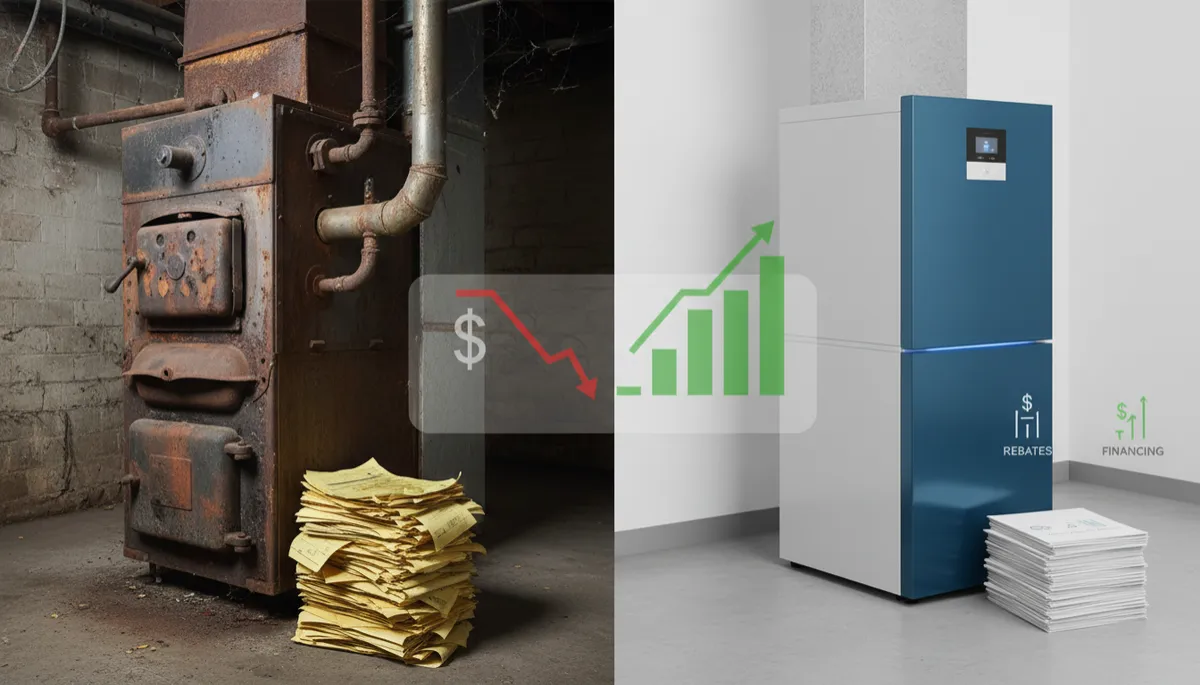
Comparing long-term repair spending to a planned replacement often reveals clear savings.
R-22 Refrigerant Phase-Out: Why It Matters for Older Systems
Many older heat pumps and central air systems still in service around New Jersey use R‑22 refrigerant. The U.S. Environmental Protection Agency banned the production and import of new R‑22 as of January 1, 2020, under the HCFC phase-out program. While existing R‑22 systems can still be operated and serviced, only recovered and reclaimed R‑22 may be used, and supplies are limited and increasingly expensive (EPA, 2026). This reality changes the financial equation whenever an R‑22 system develops a refrigerant leak or major component failure.
If your heat pump or older combination HVAC system relies on R‑22, any repair involving refrigerant should trigger a serious conversation about replacement. Paying high prices to recharge a system with a refrigerant that is no longer manufactured rarely makes long-term sense. Newer systems use non-ozone-depleting refrigerants and, increasingly, lower global warming potential options that comply with the latest EPA rules. When we advise homeowners on HVAC repair vs replace NJ decisions involving R‑22 equipment, we typically recommend planning a proactive replacement before you are forced into an emergency changeout by a catastrophic failure in mid-season.
Comfort and Reliability: Your Family’s Daily Experience
Dollars and regulations are important, but so is how your home feels. Aging systems often struggle to maintain even temperatures from room to room, run noisily, cycle on and off frequently, or leave the air feeling too dry or too humid. If you find yourself constantly adjusting the thermostat, using space heaters in certain rooms, or worrying that the system might fail during a cold snap, those are strong quality-of-life indicators that it may be time to upgrade.
Newer heating systems offer quieter operation, more consistent airflow, and advanced control options, including smart thermostats and zoning. They are designed to work as part of a whole-home comfort strategy rather than simply turning on and off. From a professional standpoint, reliability is a key value: a well-designed, properly installed modern system should deliver many years of dependable service with only routine maintenance. For many Monmouth County families, the peace of mind that comes from knowing the heat will be there when you need it is worth as much as the energy savings alone.
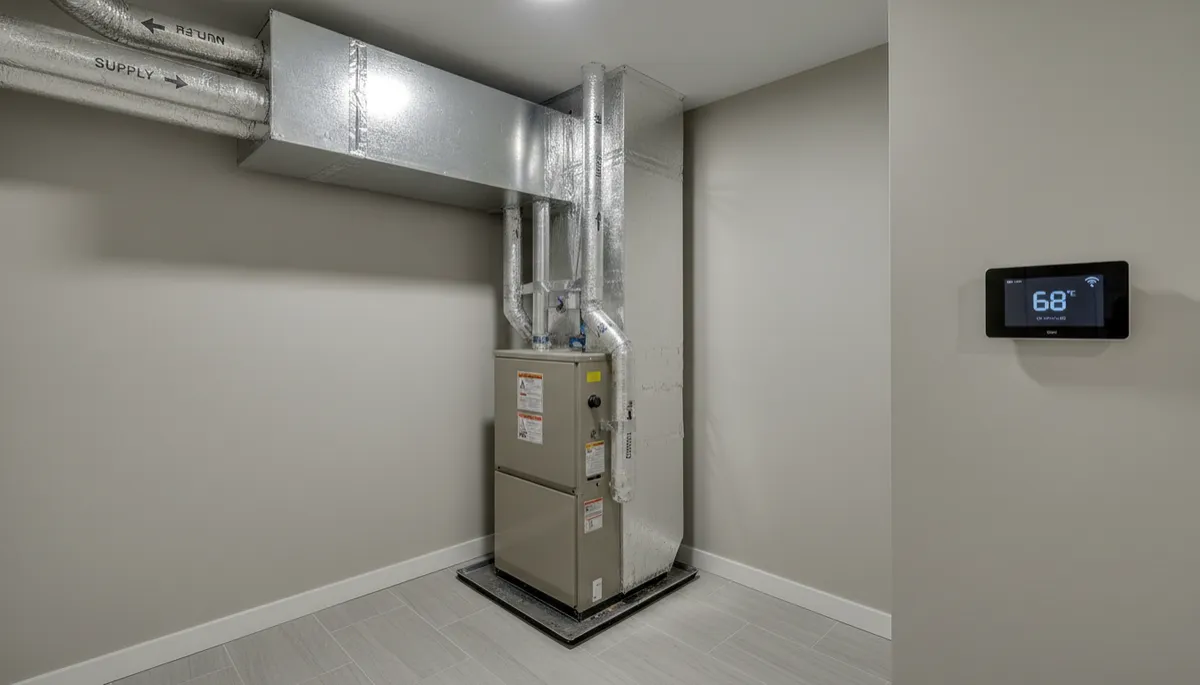
-tone scene of a brand-new high-efficiency gas furnace and matching indoor coil neatly installed...
Modern high-efficiency systems combine lower operating costs with quieter, more reliable comfort.
NJ Rebates, Tax Credits, and Financing: Making Replacement More Affordable
One of the most important reasons to consider heating system replacement Monmouth County now is the range of incentives available to help offset the cost. New Jersey’s Clean Energy Program and related initiatives support high-efficiency upgrades, particularly heat pumps and efficient gas equipment. Utilities across the state, including New Jersey Natural Gas through its SAVEGREEN program, offer rebates that can reach $900 or more for qualifying high-efficiency furnaces and boilers, with higher incentives for certain advanced systems and income-qualified households. Many of these programs require that applications be submitted within a set period after installation, typically around 120 days, so planning ahead is essential.
On top of state and utility rebates, federal tax credits under the Inflation Reduction Act can cover up to 30% of the cost of qualifying heat pumps and other high-efficiency HVAC improvements, subject to annual caps. Additional income-based federal rebates are rolling out through programs such as HOMES and the High-Efficiency Electric Home Rebate program, which may cover a substantial portion of project costs for eligible households. These incentives can often be combined, dramatically reducing the net price of a new system compared with a like-for-like replacement without efficiency upgrades.
💡 Pro Tip: A professional contractor familiar with New Jersey programs can help you identify stackable rebates, complete paperwork, and explore low-interest or on-bill financing options that spread the investment over time.
Putting It All Together: Repair or Replace Your Heating System?
When you combine the 50% rule, your system’s age, repair history, energy usage trends, refrigerant type, and comfort level—along with today’s rebates and tax credits—the right choice usually becomes clear. If your equipment is relatively young, has a clean service record, and needs only a modest repair, fixing it is often the most practical path. But if your system is 15 years or older, uses R‑22, has required multiple repairs, and your bills are climbing, continuing to patch it together is rarely the best financial move, especially when generous incentives are available in New Jersey.
Every home and family is different. The size and layout of your house, your insulation levels, your comfort preferences, and your long-term plans for the property all influence the optimal solution. That is why an on-site professional evaluation is so valuable. As a local Monmouth County HVAC expert, FIXALL Plumbing Heating & Air Condition can inspect your existing equipment, review your recent utility bills, discuss your budget, and present clear, side-by-side options for repair and furnace replacement NJ or system upgrades, including projected operating costs over time.
Call FIXALL for a Professional, No-Pressure Assessment
If you are unsure when to replace HVAC equipment in your New Jersey home, you do not have to guess. A professional assessment will give you the information you need to make a confident, financially sound decision. We will examine your current system, estimate remaining life, identify safety or code issues, and calculate the real costs of repair versus replacement—factoring in rebates, federal tax credits, and financing options that may be available to you right now.
For expert guidance on HVAC repair vs replace NJ decisions and tailored recommendations for your Monmouth County home, call FIXALL Plumbing Heating & Air Condition today at (732) 991-2211. We offer a professional, no-pressure, assessment and written quote to help you determine whether a targeted repair or a carefully planned heating system replacement will deliver the best comfort, safety, and long-term savings for your family.

