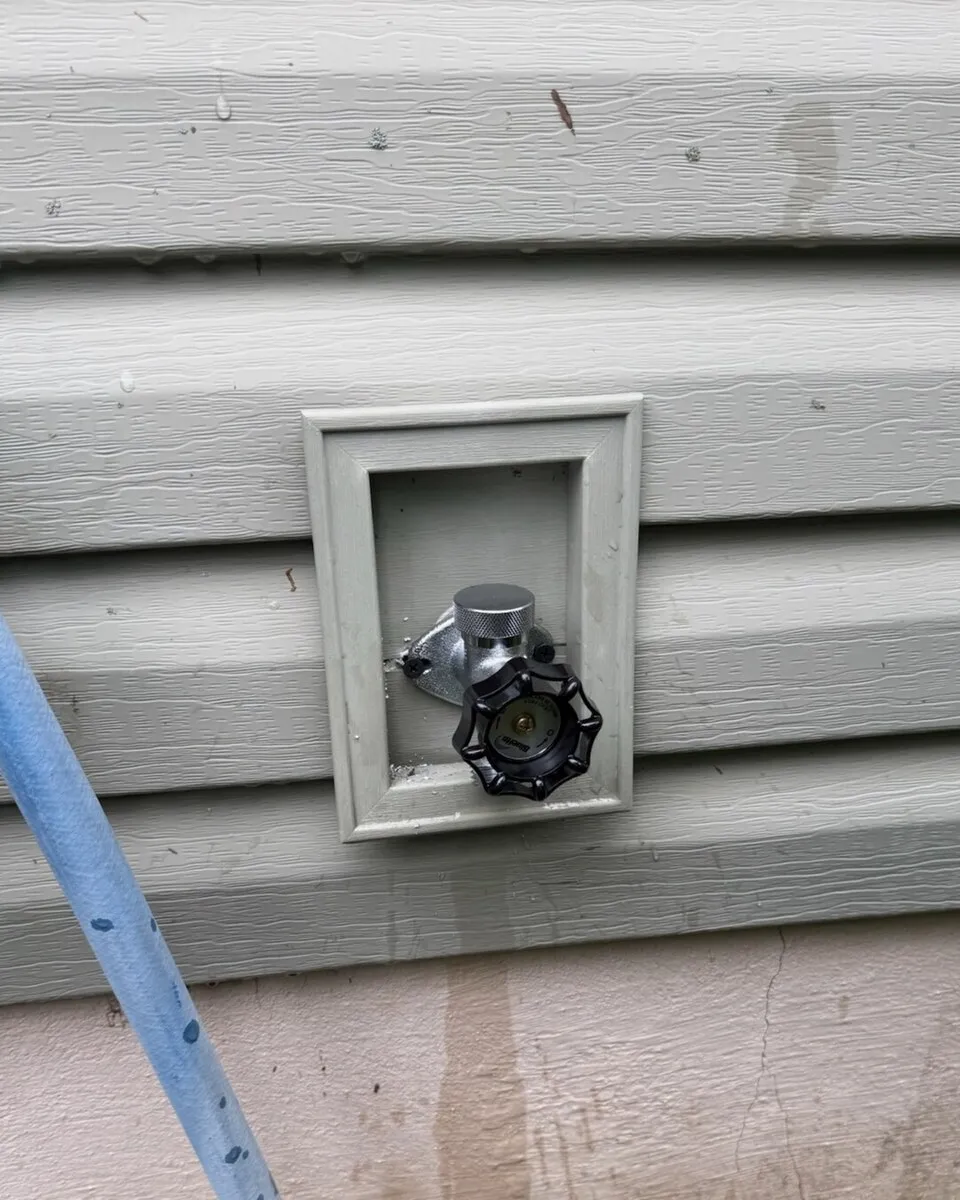
How to Winterize Outdoor Spigots in NJ Before the First Freeze
To winterize outdoor spigots in NJ, disconnect every garden hose, close the interior shutoff valve that feeds each spigot, open the outdoor spigot to drain the line, and leave it open for the winter. The whole job takes about 15 minutes for a typical house and should be done before the first hard freeze, and late October is not too early in Monmouth County. Skip it and a frozen hose bib can split the pipe inside the wall, and you may not find out until the first warm day in spring.
Key takeaways
- Water expands when it freezes, and a hose left connected traps water in the spigot and the pipe behind it.
- A frozen spigot usually splits the pipe inside the wall, not the visible fixture, so the leak shows up months later when the valve is opened.
- Frost-proof spigots still need the hose removed; a connected hose defeats the design.
- FIXALL Plumbing Club members get outdoor spigot winterization as part of the $9 per month plan.
Why do outdoor spigots freeze and break?
A spigot breaks because water trapped in the pipe freezes, expands and splits the copper or PEX behind the wall. Water expands by about 9% when it turns to ice, and metal pipe does not stretch to make room. The split happens where the water sits, which is usually a few inches inside the heated wall where you cannot see it.
The real damage comes later. The ice plug holds everything in place through the winter, so nothing leaks. The first time someone opens that spigot in April, water runs through the split and into the wall cavity, the basement ceiling or the crawlspace.
How do I winterize outdoor spigots step by step?
Winterizing takes four main steps and no special tools. Here is the checklist for each outdoor spigot on the house:
- Disconnect the garden hose, splitter and any timer, and store them indoors.
- Find the interior shutoff valve for that spigot, usually in the basement or crawlspace on the pipe heading toward the outside wall, and close it.
- Go back outside and open the spigot fully so the water between the valve and the spigot drains out.
- If the interior valve has a small bleeder cap on its side, hold a cup under it and open it to drain the last of the water, then close the cap.
- Leave the outdoor spigot open all winter so any remaining water has room to expand.
An insulated foam cover is a reasonable extra layer, but it is not a substitute for draining the line. Covers slow heat loss; they do not stop a pipe full of water from freezing during a long cold stretch.
Do frost-proof spigots need to be winterized too?
Yes, at least the first step. A frost-proof spigot has a long stem that closes the valve a foot or so back inside the heated wall, so the exposed part drains itself after each use. That only works if the water can drain out, and a connected hose blocks it.
Leave a hose on a frost-proof spigot and water stays trapped in the stem. That water freezes and splits the body of the spigot inside the wall, exactly like a standard one. So take the hose off every frost-proof spigot too, and check that it drips dry after you close it.
What if I cannot find the interior shutoff valve?
Many Monmouth County homes, especially older ones in towns like Red Bank and Long Branch, have no interior shutoff for the outdoor spigots at all. Others have one that is seized, hidden behind a finished ceiling, or so old it will not close completely. In that case you have two choices.
The quick option is to drain what you can and put an insulated cover on the spigot. The better option is to have a plumber add a shutoff valve with a bleeder, or replace the standard spigot with a frost-proof model. For the rest of the house, see our guide to winterizing home pipes in New Jersey.
How do I know if a spigot already froze and split?
The clearest sign is water inside the house when the outdoor spigot is turned on. Open the spigot in spring, let it run for a minute, then check the wall, ceiling or basement area directly behind it. Any dampness or dripping means the pipe split over the winter.
Other signs are low flow at that spigot, a handle that turns but delivers only a trickle, or a water bill that climbed with no explanation. If you see any of those, close the interior valve and keep the spigot off until it is repaired.
What affects the price of spigot repair or replacement?
The main factors are access and what has to be replaced. A split pipe behind an open basement ceiling is a shorter repair than one behind finished drywall or tile. Replacing a standard spigot with a frost-proof model costs more than a straight swap but keeps the problem from coming back.
Adding an interior shutoff valve with a bleeder is a small add-on while the line is already open. FIXALL gives upfront pricing before work starts, so the number is set before any wall is touched.
When to call FIXALL
- You turned on an outdoor spigot and found water inside the house, or the spigot runs at a trickle. Schedule leak detection before the wall gets worse.
- You cannot find a shutoff valve for your spigots, or the one you found will not close. FIXALL serves Holmdel and every town in Monmouth County.
- You want the spigots handled every fall without thinking about it. The FIXALL Plumbing Club includes outdoor spigot winterization along with a yearly 22-point plumbing inspection.
Frequently asked questions
When should I winterize outdoor spigots in New Jersey?
Do it before the first hard freeze, and late October is not too early in Monmouth County. A single hard-freeze night can be enough to split a pipe that still holds water. If you missed the first freeze, winterize anyway, because the damage builds with every cold night.
Can I just leave the hose connected and cover the spigot?
No. A connected hose traps water in the spigot and the pipe behind it, and a foam cover only slows the cold rather than stopping it. Remove the hose first; the cover is an optional extra after the line is drained.
Does the FIXALL Plumbing Club include spigot winterization?
Yes. The Plumbing Club is $9 per month and includes outdoor spigot winterization, a yearly 22-point plumbing inspection, a water heater flush, 10% off plumbing repairs and 50% off the service fee. It is month to month and you can cancel anytime.
Call or text (732) 991-2211 if a spigot froze, you cannot find the shutoff, or you want FIXALL to winterize the house, or reach us at callfixall.com/contact. Upfront pricing before any work starts, every time.

