How to Keep Your Pipes From Freezing This Winter: A Monmouth County Checklist
The first real cold snap hits Monmouth County every year, and every year our phones light up with frozen and burst pipes. Almost all of them could have been prevented with an hour of work in the fall.
Here's the checklist we'd run on our own homes.
1. Shut off and drain your outdoor spigots
This is the #1 frozen pipe we see. Water left in the line to an outdoor spigot freezes, expands, and splits the pipe inside the wall. You often don't find out until spring, when you turn the hose on and water pours into the basement.
Disconnect every garden hose. A hose left attached traps water, even on a frost-free spigot.
Find the indoor shutoff valve for each outdoor line, turn it off, then open the outdoor spigot to drain it.
Leaking or broken spigot? Read our outdoor hose spigot guide and get it fixed before winter.
2. Insulate pipes in cold spots
Pipes freeze where heat doesn't reach. Check:
Crawlspaces and unfinished basements, common in older Bayshore and shore-town homes
Exterior walls, especially kitchens and bathrooms on the north side
Garages, attics and additions that were never properly insulated
Foam pipe sleeves from the hardware store are cheap and easy for exposed pipes. Seal drafts around foundation vents, dryer vents and where pipes come through the wall.
3. Know where your main water shutoff is
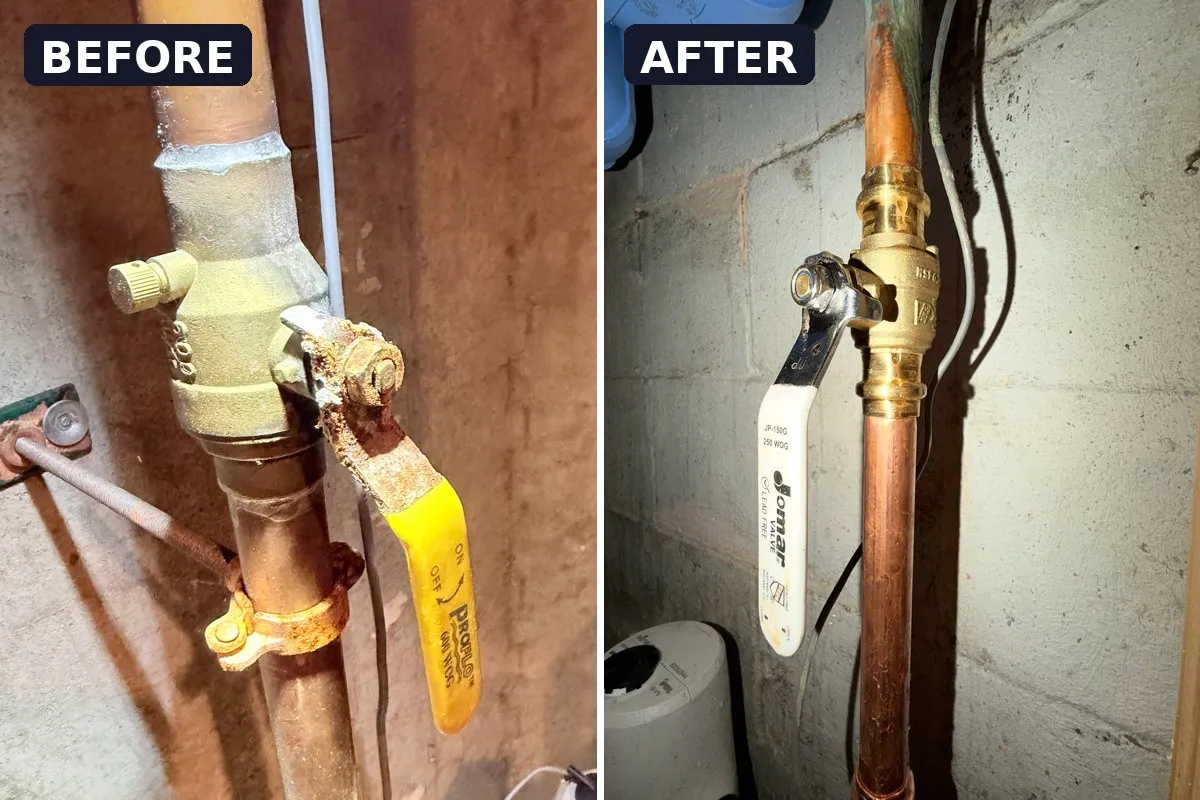
If a pipe does burst, shutting off the main is what stops a small leak from becoming a flooded basement. It's usually where the water line enters the house: basement, crawlspace, utility closet or near the water heater. Find it, make sure it turns, and show everyone in the house.
4. Keep the heat on
Keep your thermostat at 55°F or higher all winter, even when you're away. Turning the heat way down to save on a weekend trip is one of the most common ways pipes freeze.
5. On the coldest nights
Open cabinet doors under sinks on exterior walls so warm air reaches the pipes.
Let a faucet on an exterior wall drip slowly. Moving water is much harder to freeze.
Keep the garage door closed if there are water lines in the garage.
6. Shore houses and second homes
A house that sits empty all winter is the highest risk there is. Either keep the heat on and have someone check it, or have the plumbing properly winterized: water shut off, lines drained, and fixtures protected. Don't just turn the heat off and hope.
If a pipe freezes anyway
No water or just a trickle from a faucet usually means a frozen pipe. Keep the faucet open and warm the pipe gently with a hair dryer or heating pad, starting near the faucet. Never use a torch or open flame.
If a pipe has already burst, shut off your main water valve and follow the steps in our plumbing emergency guide. A live person answers at FIXALL 24/7.
Frequently asked questions
At what temperature do pipes freeze?
The risk starts once it drops below freezing. It gets serious during long stretches in the teens or colder, especially for pipes in unheated spaces.
Should I drip all my faucets?
No. Just the ones on exterior walls or over unheated spaces, and only on the coldest nights.
Can FIXALL winterize my shore house?
Yes. Call us before the first hard freeze and we'll set it up.
Need help now?
FIXALL is a family-owned, NJ-licensed plumbing, heating and air company based in Aberdeen (NJ Master Plumber Lic. #12125). We've served Monmouth County for 15+ years, with a 4.9-star rating from 350+ Google reviews.
Call (732) 991-2211, 24/7, or book online. One call. One crew. One price in writing.

